
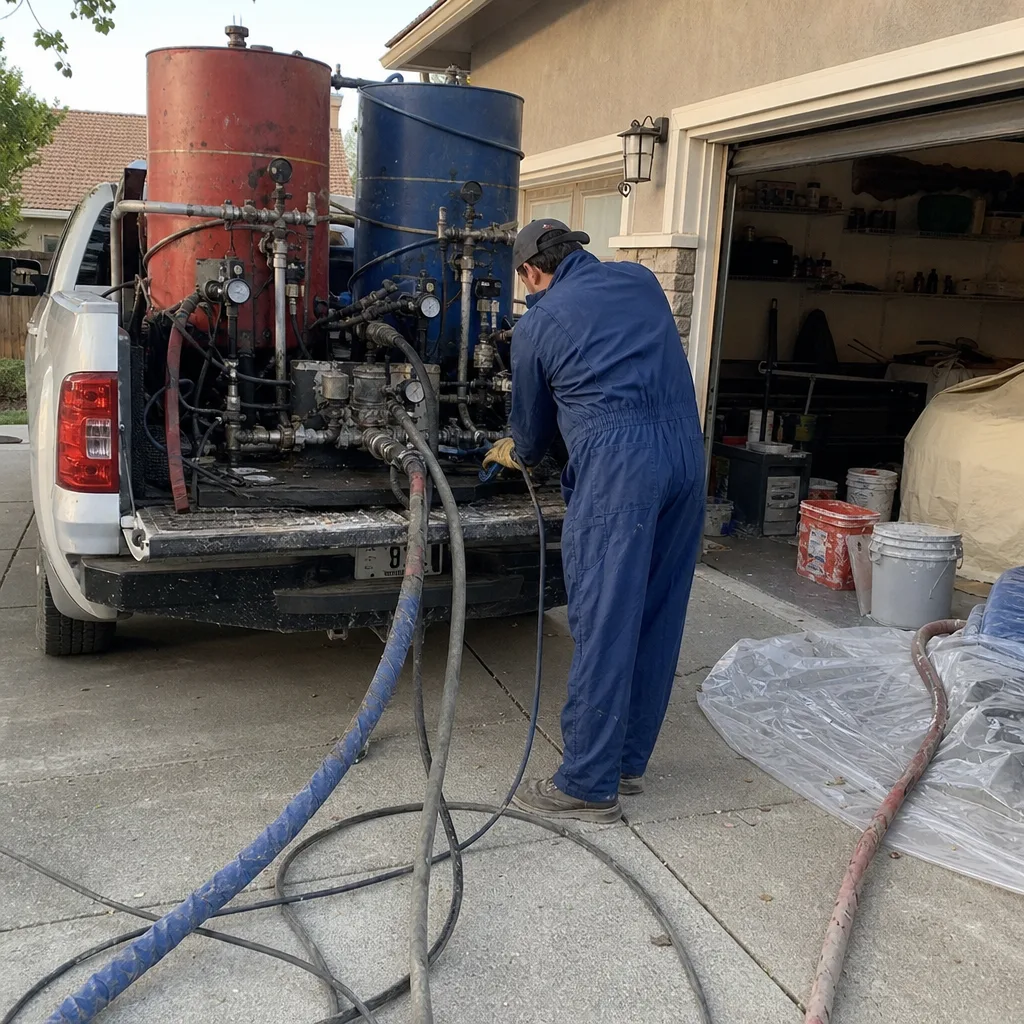
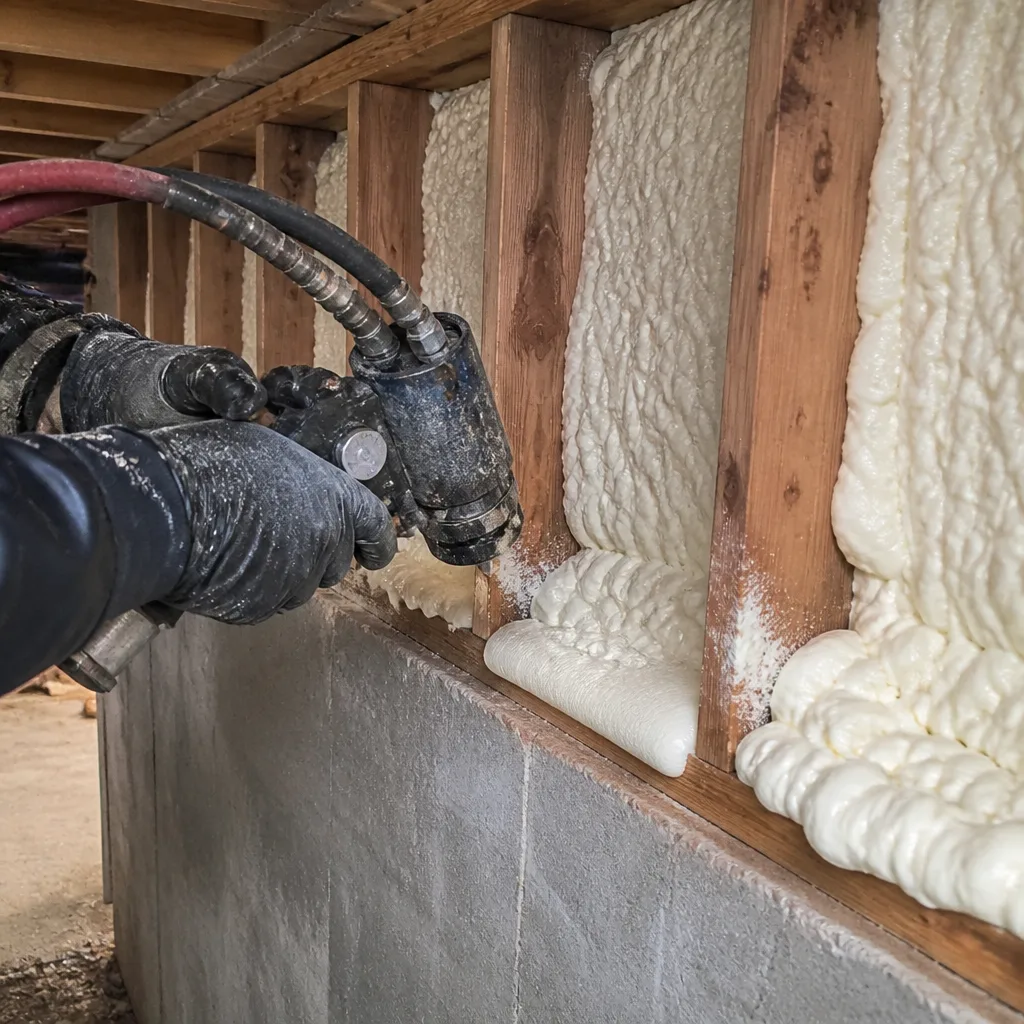
Spray Foam Insulation in Cypress, CA: Costs, Options, and What Actually Works Here
Spray foam insulation in Cypress costs roughly $2,100 to $6,800 for a typical garage or attic project, with closed-cell running higher per board foot than open-cell. Most Cypress homes we quote are 1960s and 1970s tract houses that still carry original low-R attic batts. The real story in this city isn’t just R-value. It’s what the marine layer does to those vented attics and how a foam job either fixes that or makes it worse.
We’re Hometown Insulation Co, and insulation is all we do. If you’re losing conditioned air through a 50-year-old attic assembly or wondering why a converted garage still smells damp, call us at (877) 265-9918 for a free estimate. We’ll tell you straight whether spray foam is the right material for your house, and if it is, which type belongs where.
Why Hometown Insulation Co Is the Spray Foam Team Cypress Calls First
Cypress homeowners deal with the same rebuild we’ve seen a hundred times: a mid-century tract home off Moody Street, Valley View Street, or Ball Road where the original insulation has compressed to nothing and the attic bakes all afternoon. Our crews know those floor plans. We know the low-pitch shingle roofs, the stucco exteriors, and the garage conversions that never got insulated when they should have been.
Nate Cervantes leads our spray foam work in Cypress. He’s the one who walks the attic line and tells you whether the underside of your roof sheathing can handle foam without trapping the condensation this area is known for. That’s the kind of judgment call that separates a specialist from someone who sprays foam on the side. Our Cypress customers appreciate that we carry both Spray Foam Insulation options, Icynene and Demilec, rather than forcing one product onto every home.
We respond to Cypress service calls fast, usually same or next day for estimates. When a garage has been foamed badly or a converted room is sweating through the walls, waiting weeks isn’t an option.
The Salt-Air Reality: Why Most Cypress Garage Insulation Advice Falls Short
Cypress sits close enough to the coast that the marine layer rolls in most evenings, and that salt-laden air works on metal hardware years faster than it would in Anaheim or Fullerton. This matters for spray foam because a garage that gets foamed without addressing the air leaks and rusting fasteners ends up with new insulation fighting the same old moisture path. We removed sagging fiberglass from a converted garage near Cypress College last spring and found the opener chain badly corroded while the springs were still functional. Salt air doesn’t attack everything at once. It picks its targets: hinges first, then rollers, then the spring coils themselves.
In Cypress, spray foam has to be judged on whether the assembly can dry. Closed-cell on the sheathing line in garages makes sense here because it acts as an air and vapor barrier. Open-cell, selectively applied inside the house, lets moisture move through rather than trapping it. Foaming every cavity the same way is lazy, and on Cypress tract homes it’s exactly what creates condensation problems later.
On a mid-century S&S-era tract home off Lincoln Avenue, the garage had been converted to living space years earlier without any insulation upgrade. Our crew found open-cavity walls sweating on the inside and the door hardware rusting from salt air. We foamed the garage-to-house wall and the bare exterior wall with closed-cell, sealed the attic lid transition, and swapped corroded fasteners and rollers for galvanized and stainless parts. The converted room stopped smelling like damp harbor air, and the opener ran quieter within the same week.
This is the pattern in Cypress: Spray Foam Insulation in Cypress work is retrofit work on original tract-home envelopes. It’s not new construction. The houses were built fast, insulated thin, and now they leak air and rust hardware in the salt air. Our job is to fix the envelope first and foam it right second.
Garage Spray Foam Insulation in Cypress
Garage spray foam insulation in Cypress is one of our most requested services, because so many of these 1960s and 1970s homes have garages with bare stud walls or thin original batts that do almost nothing against afternoon heat. Most garage foam jobs we do in the 90630 run between $1,800 and $4,200 depending on wall count, ceiling treatment, and whether the garage door panel itself needs insulated backing. A standard two-car garage with three exterior walls and a ceiling lid typically lands around $2,600 to $3,400.
Closed-cell foam works best here. It air-seals the wall cavities and blocks the salt-laden air that corrodes track hardware and hinges. We also recommend coating the springs and installing stainless fasteners when we foam a Cypress garage, because a sealed envelope shouldn’t be undone by hardware failing early.
Converted Garages Need the Transition Wall Foamed
Cypress has a large share of garage conversions from the 1980s and 1990s, many of which never got insulated at all. The problem is usually the transition wall where the garage once connected to the house, plus the attic lid directly above. If you only foam the exterior walls, summer attic heat still radiates down through the ceiling path and the room never holds temperature. Foaming the transition wall and the lid at the same time closes that gap.
Why the Attic Lid Matters More Than You’d Think
On Cypress tract homes, the garage ceiling is usually open to the vented attic above. That means a foamed garage with an unfoamed lid lets hot attic air and damp marine-layer air drift straight into the space. We foam the lid to create a boundary, then air-seal around the pull-down ladder or hatch. It makes a measurable difference within days, especially in July and August when afternoon attic temps climb past 130 degrees.

Closed Cell Spray Foam Insulation in Cypress
Closed cell spray foam insulation in Cypress is the material we reach for when a house has a moisture contact or air-intrusion problem, and that’s most of them here. Closed-cell runs about $1.80 to $3.50 per board foot installed in the 90630 market, so a typical rim joist and wall job might land between $2,400 and $5,600 depending on coverage. It’s the right foam for garage sheathing lines, converted rooms with salt-air exposure, and anywhere an air and vapor barrier matters.
Closed-cell also adds structural rigidity to older wood-frame walls, which matters on 50-year-old Cypress tract homes where the framing has settled. We use Demilec closed-cell products for most of these applications because they spec well on high-performance building envelopes and handle the moisture conditions Cypress throws at them.
Underside of Sheathing Work on Low-Pitch Roofs
This is the most technical foam job we do in Cypress, and it’s the one most likely to be done wrong by a generalist. The low-pitch shingle roofs on Cypress tract homes trap heat and moisture under the sheathing, especially where the marine layer has been condensing for decades. Closed-cell applied directly to the underside locks out that moisture. But only if the existing ventilation is rebalanced. Nate walks every one of these attics personally before we quote, because foaming a roof deck without checking the ridge and soffit vents can trap condensation that was already staining the sheathing.
Rim Joist and Band Board Sealing
Air leaks at the rim joist are one of the quietest energy drains in Cypress homes. Closed-cell foam at the band board stops basement and crawlspace air from migrating into the living floors. It also keeps out the damp salt air that rusts electrical boxes and framing connectors. We typically quote rim joist work separately because the coverage area is small but labor-intensive.
Trusted Brands We Service in Cypress
We install Icynene and Demilec spray foam products in Cypress, which covers both open-cell and closed-cell applications with products built for high-performance homes. For homeowners who want something other than foam, we also carry Owens Corning, Johns Manville, and GreenFiber options, because not every Cypress house needs spray foam and we’d rather match the material to the problem than upsell you into the wrong one. We keep products and parts stocked locally, which means faster turnaround on Cypress jobs than a crew driving down from LA or out from the Inland Empire.
Common Spray Foam Insulation Problems We See in Cypress Homes
- Foamed-but-unsealed garages. A previous contractor foams the walls but ignores the gap around the roll-up door, the side seals, or the pull-down ladder, and salt air keeps getting in. The new foam gets blamed, but the real issue is the unsealed air path re-rusting the hardware and carrying moisture straight through.
- Rusted hinges, rollers, and springs. The marine layer in Cypress corrodes garage-door hardware years ahead of inland cities. We regularly find springs and chains rusted through on 1990s-era openers while the insulation still looks new. Foam without hardware upgrades means doing the job twice.
- Closed-cell on the roof sheathing with no vent plan. A crew sprays the underside of the sheathing, knocks out the old gable vents, and doesn’t rebalance the soffit and ridge ventilation. The marine-layer condensation that used to dry out now gets trapped, and the sheathing rots faster than it did before.
- Half-done garage conversions. The exterior walls get foamed but the attic lid transition and garage-to-house wall stay bare. Summer attic heat pushes through the lid, and the room never cools evenly. The homeowner spends thousands and feels almost no difference, then calls us to finish the job properly.
Pricing for Spray Foam Insulation in Cypress, CA
Here’s what we see in Cypress specifically, based on the tract-home stock and typical coverage areas. Open-cell attic work runs $1.20 to $2.50 per board foot. Closed-cell runs $1.80 to $3.50 per board foot. A full garage foam job lands between $1,800 and $4,200. A roof-deck or attic-lid application is $2,400 to $6,800 depending on square footage and whether we’re rebalancing ventilation. Rim joist sealing on a typical Cypress two-story runs $900 to $2,200. Existing batt removal adds $400 to $1,100 depending on attic depth and debris volume. These are real ranges from jobs around Cypress, not national averages. Call (877) 265-9918 and we’ll walk your house, measure the cavities, and give you an exact number before any work starts.
We Also Serve Cities Near Cypress
Hometown Insulation Co runs crews through La Palma, Los Alamitos, Hawaiian Gardens, and Stanton the same week we’re in Cypress. If you’re on the edge of the 90630 and wondering whether we cover your block, call us. These neighboring cities share the same tract-home vintage and salt-air hardware problems, so the same solutions apply.
Serving Cypress, CA — Our Local Coverage Area
We’re based in the Cypress area and know this community well. Use the map below to see our service coverage — if you’re nearby, we can almost certainly help.
FAQs About Spray Foam Insulation in Cypress
Salt air in Cypress corrodes garage-door springs, hinges, rollers, tracks, and opener chains years before inland cities see the same damage. If you foam a garage without swapping in galvanized or stainless hardware and sealing the door gaps, you’ll have new insulation and rusted-out moving parts. We address the envelope and the hardware together so one doesn’t undo the other. Call (877) 265-9918 and we’ll inspect the door and the walls in the same visit.
Yes, but it has to be done with the ventilation rebalanced, or you’ll trap the marine-layer condensation that already stains sheathing above the original batts on Cypress’s low-pitch shingle roofs. We look at your ridge and soffit vents before quoting any roof-deck foam job. Most Cypress homes can handle closed-cell on the sheathing, but a few need vent work done at the same time.
Usually yes, and the critical part is foaming the transition wall and the attic lid, not just the exterior walls. Years of attic heat and damp air moving through the uninsulated ceiling path is why most converted Cypress garages never hold temperature. Closed-cell on the walls plus air-sealing at the lid fixes the comfort and the moisture problem. We’ve done this exact job on converted garages off Holder Street and Cerritos Avenue, and the difference is immediate.
Expect a retrofit job on original thin batts, usually R-11 or R-19, with uninsulated wall cavities and a vented attic that bakes all afternoon. We remove the old material, air-seal the ceiling plane, and either foam the roofline with open-cell or insulate the lid and add ventilation. Cypress houses with flat shingle roofs need special attention to sheathing moisture. The work typically takes one to two days.
No, but it means you shouldn’t foam every cavity the same way. The marine layer brings moisture that needs a drying path. Closed-cell on the sheathing line in a garage works because it’s a vapor barrier. Open-cell in a house attic lets moisture move through. The mistake is spraying closed-cell everywhere and trapping condensation above the original batts. We’ll tell you which material belongs where in your specific Cypress house. Estimates are free. Call (877) 265-9918 to book one.
Get a Free Spray Foam Estimate in Cypress, CA
If your energy bills climb every summer, your converted garage still smells damp, or the attic insulation has compressed to nothing after 50 years of marine layer and heat, we can help. Hometown Insulation Co is a residential insulation specialist, not a general contractor who foams on the side. Nate and our crews work in Cypress weekly, know the tract-home floor plans, and understand the salt-air hardware failures no one else talks about. Call (877) 265-9918 for a free estimate. We’ll walk the attic, check the garage, and tell you exactly what your home needs, brand by brand and cavity by cavity.
Written by Nate Cervantes, Owner at Hometown Insulation Co, serving Cypress and the surrounding cities.