
Fast, Reliable Spray Foam Insulation Across La Habra Heights
Spray foam insulation in La Habra Heights homes typically costs between $1.50 and $4.50 per board foot installed, with most whole-attic or major retrofit projects landing in the $4,000 to $14,000 range depending on cavity depth, access, and whether we’re coordinating with WUI fire-hardening work. We run crews into the hills above La Habra Heights every week, so a rim joist or crawl space job can usually be scheduled within a few days of the estimate. If you’re tired of canyon-night drafts or rooms that won’t hold temperature, call Nate and the crew at Hometown Insulation Co at (877) 265-9918 for a straight answer and a free on-site look at your attic geometry.
La Habra Heights isn’t like the flatland cities below. The winding roads off Hacienda and Skyline, the long private drives, the custom hillside builds with vaulted ceilings and exposed beams: all of it changes how spray foam gets scoped and applied. We plan for that before we park the rig, not after we open the attic hatch.
Key Takeaways
- Spray foam pricing in La Habra Heights runs roughly $1.50 to $4.50 per board foot, with rim joist and crawl space jobs on the lower end of total cost.
- Most La Habra Heights properties sit in the Very High Fire Hazard Severity Zone, so foam work often pairs with attic vent and eave fire-hardening coordination.
- Vaulted ceilings, exposed beams, and irregular attic bays are the norm here, not the exception. We scope for the actual cavity, not a one-size-fits-all R-value.
- We carry Icynene and Demilec spray foam lines alongside fiberglass and cellulose brands, so the recommendation is made for your house, not our inventory.
- Free estimates, local scheduling, and hillside access experience. Call (877) 265-9918.
Why Hometown Insulation Co Is La Habra Heights’s Preferred Spray Foam Insulation Company
Insulation is all we do. We’re not a roofing crew that also sprays foam on the side, and we’re not a general contractor splitting attention across five trades. Every technician on a La Habra Heights job is trained on spray foam first. That focus matters when you’re air-sealing a rim joist on a 1970s contemporary with a post-and-beam ceiling and WUI-screened gable vents.
La Habra Heights homeowners call us because we speak the local house. We know the mid-century ranch stock on the flatter lots near West Road, the custom contemporary builds cut into the hillside, the guesthouses and add-ons where the original insulation was an afterthought. When we walk a property off Hacienda Road or up near the top of Skyline Drive, we know what to expect before the ladder goes up.
Our spray foam work leans on Icynene and Demilec, two brands specified regularly in high-performance building envelopes. You’ll hear us recommend them when the home calls for it. You’ll also hear us tell you when a different material makes more sense. We carry eight brands across fiberglass, mineral wool, cellulose, and spray foam, so the fit-to-home conversation is real, not a single-brand pitch. Nate Cervantes, who runs Hometown Insulation Co, built the company around that principle: the right insulation for your home, not the easiest one to install.
Rim Joist Spray Foam in La Habra Heights
Rim joist spray foam in La Habra Heights homes addresses the single biggest air-leak point in most hillside builds: the gap where floor framing meets the foundation wall. The rim joist, that band of wood around the perimeter of the house, is where conditioned air escapes and outside air gets pulled in. In a canyon setting where the temperature can swing 30 degrees between noon and midnight, an unsealed rim joist means the floor over your crawl space never quite warms up. A typical rim joist spray foam job in La Habra Heights runs $900 to $2,800 depending on linear footage and access. It’s the highest-value retrofit most homes here can get, dollar for dollar.
Common Signs You Need Rim Joist Sealing
Cold floors near exterior walls are the classic tell in La Habra Heights homes, especially on the canyon-facing side of the house. You might also notice drafts at the baseboard, musty crawl space air drifting up, or rodent and insect traffic where open joist bays meet the foundation. We sealed rim joists on a 1980s contemporary off a private drive near Hacienda Road, and the homeowner’s first comment was that the after-dark floor draft was finally gone.
How the Application Works
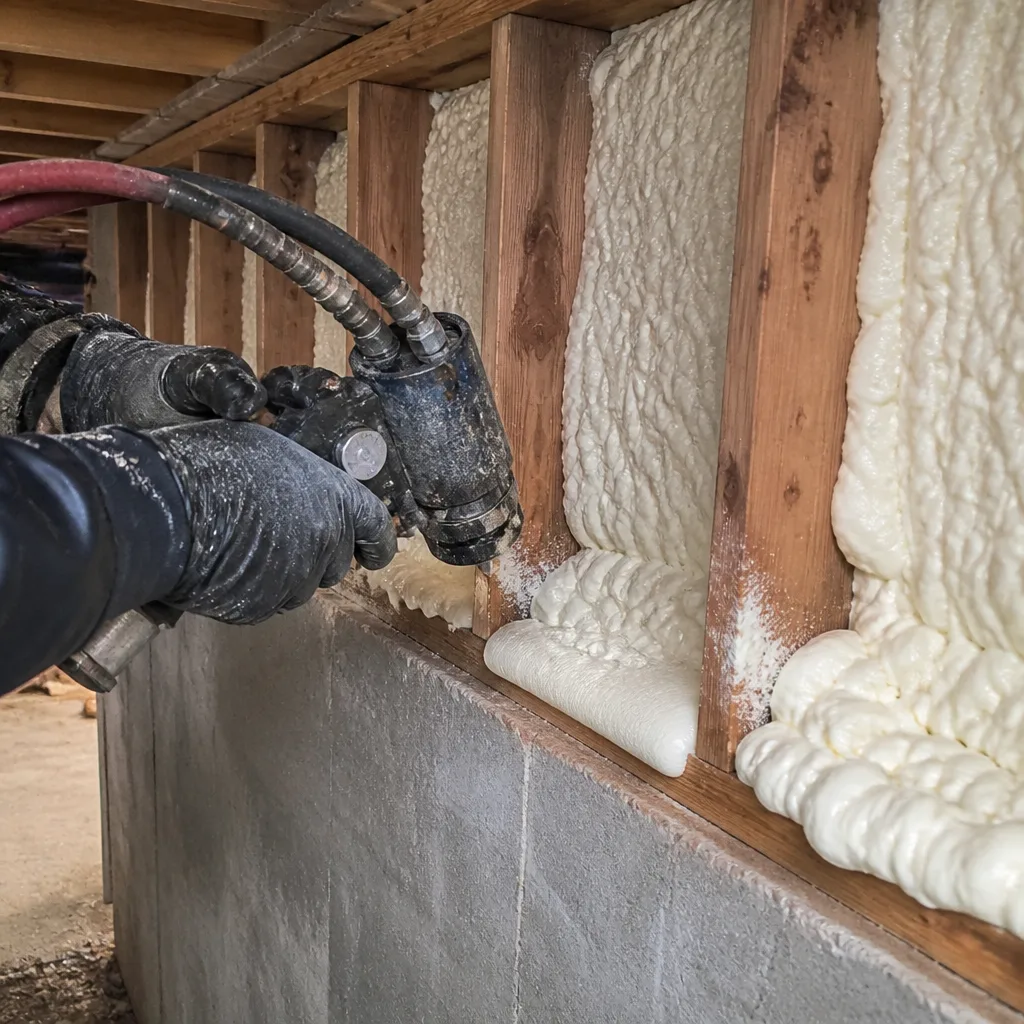
We work from the crawl space or basement side wherever possible. Open-cell spray foam is applied directly into each joist bay, expanding to fill the cavity and bonding to both the subfloor above and the rim board itself. That creates an air seal, not just insulation, which is what separates spray foam insulation from simply stuffing fiberglass into the same void.
Crawl Space Spray Foam Insulation in La Habra Heights
Crawl space spray foam insulation in La Habra Heights typically involves coating the crawl space walls or the subfloor underside, depending on whether the space is vented or sealed, and it runs $2,500 to $7,500 for most hillside homes here when we factor in the uneven terrain, pier-and-beam foundations, and access through tight grade-level hatches. La Habra Heights crawl spaces rarely match the clean rectangles you see in newer tract subdivisions. We’re often working around rock outcroppings, stepped foundation walls, and decades of mixed prior insulation work.
Why Hillside Crawl Spaces Need Different Treatment
The slope matters. A crawl space cut into the hillside on the uphill side stays cooler and holds more moisture than the downhill side, which means the foam specification needs to account for that differential. We often pair crawl space wall foam with a vapor barrier upgrade so the home isn’t fighting canyon moisture while it’s trying to hold heat.
Sealed vs. Vented Crawl Space Decisions
In a Very High Fire Hazard Severity Zone, vented crawl spaces carry an extra complication. Ember intrusion through crawl space vents is a recognized wildfire risk, and some La Habra Heights homeowners are moving toward sealed, conditioned crawl spaces as part of a broader hardening scope. When that’s the plan, we coordinate the foam application with the vent retrofits so the insulation and the fire-resistant venting work together instead of fighting each other.

Trusted Brands We Service in La Habra Heights
We install Icynene and Demilec spray foam because those are the two lines we trust for hillside retrofit work where adhesion, expansion control, and long-term air-seal performance actually get tested by canyon weather. For homes where spray foam isn’t the right call, we also carry Owens Corning fiberglass, Rockwool for fire resistance and sound control, and GreenFiber cellulose for anyone prioritizing recycled-content materials. Carrying multiple brands means the conversation in your living room is about your house, not about what product our warehouse happens to be long on. That’s the whole point of La Habra Heights being a market we serve with the full lineup, not a stripped-down version of it.
Spray Foam Insulation and La Habra Heights Wildfire Standards
Here’s what makes La Habra Heights different from La Habra, Fullerton, or La Mirada below the hill: most of this city sits in a designated Very High Fire Hazard Severity Zone, and building standards reflect that. The property you live in off Hacienda Road or up near the horse corrals off Skyline Drive is held to WUI construction codes that flatland tract homes never see. What that means for spray foam work is practical. We don’t just open the attic and start spraying. We check the eave vents, the gable screens, the soffit details, and the attic venting strategy first, because careless foam application can block the very venting that your WUI compliance depends on.
We foamed the rim joists and knee-wall cavities of a 1980s contemporary on a winding private drive off Hacienda Road, where the original fiberglass batts had sagged away from vaulted ceiling framing and the gable vents were WUI-screened. Because the awkward exposed-beam attic gave us irregular bays, we used Icynene spray foam to seal the rim and air-seal the eaves, then coordinated with the fire-hardening scope so the new vents went in before we closed the cavities. The homeowner reported the canyon-night draft along the floor finally gone. That’s the way it should be done up here: insulation and fire hardening as one scope, not two crews tripping over each other.
The canyon topography also means sun exposure and attic heat gain swing dramatically from lot to lot. A house on a south-facing slope above the San Gabriel Valley takes a very different thermal beating in August than a shaded north-facing lot tucked under the hill. No two hillside homes get the same foam recipe. We scope each one individually.
Common Spray Foam Insulation Problems We See in La Habra Heights Homes
- Sagging fiberglass batts on vaulted ceilings. The original batts in many hillside builds were friction-fit into vaulted or cathedral ceiling bays, and gravity plus canyon temperature swings eventually pulls them away from the roof deck. The convective gap that opens up is what spray foam must bridge when we retrofit.
- Blocked or sealed WUI attic vents. We regularly see properties where a previous foam application or sloppy batt install left eave or gable venting partially blocked. In a Very High Fire Hazard Severity Zone, that’s a code problem and a safety problem, not just a comfort issue.
- Irregular attic geometry from remodels and add-ons. Mid-century and 1970s-to-1990s hillside homes here often have add-on wings, guest structures, and knee walls that create attic bays no standard thickness chart ever accounted for. Off-angle bays mean off-the-shelf foam assumptions miss the actual cavity.
- Mixed insulation types from decades of piecemeal work. Most La Habra Heights homes we enter have a patchwork: fiberglass batts in one section, blown-in in another, a can of DIY foam around a duct penetration, and original rock wool in the oldest wing. We map the whole attic before recommending anything.
Pricing for Spray Foam Insulation in La Habra Heights, CA
You should know the numbers before we shake hands. Open-cell spray foam in La Habra Heights runs about $1.50 to $2.50 per board foot installed. Closed-cell spray foam, which delivers higher R-value per inch and acts as a vapor barrier, runs $2.50 to $4.50 per board foot. A full rim joist job lands between $900 and $2,800. A crawl space encapsulation with foam walls runs $2,500 to $7,500. A full attic foam retrofit on a vaulted-ceiling hillside home can run $6,000 to $14,000, with the wide spread driven by access difficulty, WUI vent coordination, and how much cavity prep the existing framing requires. Estimates are free, and the number we give you is the number we hold. Call (877) 265-9918 for an exact quote on your house.
We Also Serve Cities Near La Habra Heights
Hometown Insulation Co runs crews into La Habra, East La Mirada, Fullerton, and La Mirada on the same weekly schedule, so if your property sits just over the ridge or down at the base of the hill, we’re already in your area. The hillside-specific scoping stays the same, and we bring the same multi-brand options to every job. Call us at (877) 265-9918 to book a free estimate anywhere in the corridor.
Serving La Habra Heights, CA — Our Local Coverage Area
We’re based in the La Habra Heights area and know this community well. Use the map below to see our service coverage — if you’re nearby, we can almost certainly help.
FAQs About Spray Foam Insulation in La Habra Heights
Yes, it directly affects the order of work. We check every attic vent, eave screen, and soffit detail before applying foam, because WUI construction standards in La Habra Heights require that fire-hardening venting stay fully functional. When a retrofit pairs foam with fire-hardening upgrades, we coordinate so the vents go in first and the foam closes the thermal envelope afterward. Call (877) 265-9918 to have your attic checked against the WUI requirements for your lot.
Yes, and it’s the most common retrofit we handle in La Habra Heights. We scope vaulted exposed-beam attics cavity by cavity, checking for sagged original batts, unsealed beam pockets, and vent baffles before spraying. The foam has to bridge the irregular bays and air-seal the eaves, not just cover the old material. We’ll give you a cavity-by-cavity plan at the estimate, not a generic square-foot price. Call (877) 265-9918 to schedule that walkthrough.
Because rim joists and crawl spaces are where most of the air movement happens in a hillside house. Attic insulation slows conductive heat transfer, but an unsealed rim joist keeps pulling outside air into the floor assembly every time the canyon wind shifts. In La Habra Heights homes with pier-and-beam foundations and vented crawl spaces, sealing the rim and treating the crawl space usually delivers faster comfort gains per dollar than adding more attic insulation. Call (877) 265-9918 and we’ll tell you where your biggest air leaks are before we quote anything.
Yes. We install Icynene and Demilec spray foam, and we carry Owens Corning and Johns Manville fiberglass, Rockwool mineral wool, and GreenFiber cellulose. You get the material that matches your house and your priorities: fire resistance, recycled content, sound control, or air-seal performance. Call (877) 265-9918 and ask for Nate Cervantes if you want to talk material options before the estimate.
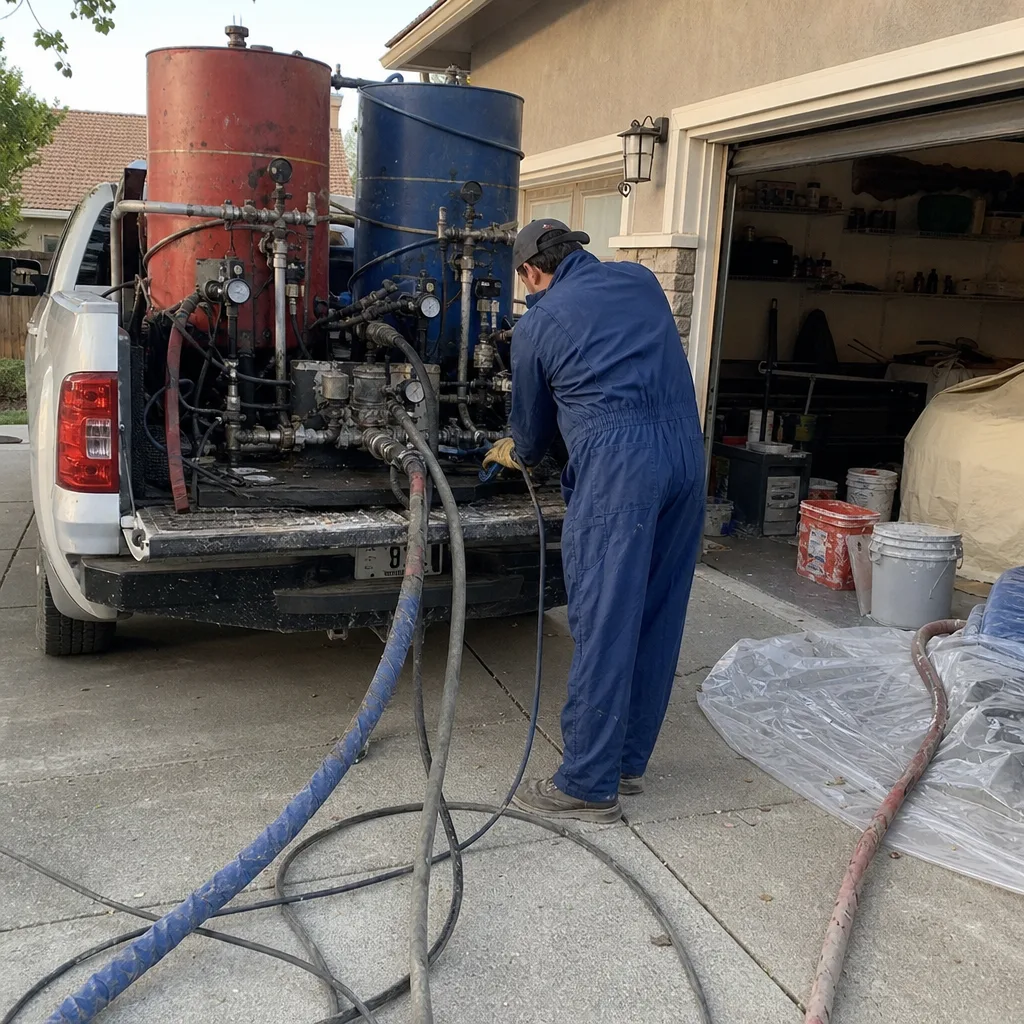
It affects staging, hose runs, and scheduling. Many La Habra Heights properties have long private drives, tight turnarounds, and limited flat ground near the house, so we plan equipment placement and foam hose routing before crew day rather than improvising on-site. Hillside access also means we quote for the actual house, not a hypothetical flat-lot job. Call (877) 265-9918 with your address and we’ll factor the real access conditions into the estimate.
Written by Nate Cervantes, Owner at Hometown Insulation Co, serving La Habra Heights and the surrounding San Gabriel Valley hills.