
Fast, Reliable Spray Foam Insulation Across Mayflower Village
Spray foam insulation in Mayflower Village costs roughly $2,200 – $5,800 for a typical attic job, with most projects landing between $3,000 and $4,500 depending on whether you choose open-cell or closed-cell foam and what condition the attic is in first. We’re Hometown Insulation Co, and insulation is all we do, so we know exactly what these pre-1978 bungalows off Mayflower Road need before a single drop of foam goes in. Call (877) 265-9918 and we’ll walk your attic with you, talk through what we see, and give you a straight answer on cost.
Why Hometown Insulation Co Is Mayflower Village’s Preferred Spray Foam Insulation Company
Mayflower Village homes aren’t like the newer subdivisions across Arcadia or North El Monte. Most houses here went up between the 1920s and 1960s, long before California’s 1978 energy code existed. That means attics with low-pitch roofs, tight access hatches, settled insulation, and in a surprising number of cases, original knob-and-tube wiring still running through the joists. A general contractor who does spray foam on the side won’t catch what Nate Cervantes and our crew catch within the first ten minutes of looking. We’ve been called out to Mayflower Village enough to know which streets still have live knob-and-tube, which bungalows on Mayflower Road have attic access barely wide enough for a ladder, and which post-war tract homes have roof decks that cook in the San Gabriel Valley sun. That local familiarity changes how we quote, how we prep, and how long the job takes. Homeowners in 91006 tell us the same thing: they wanted a specialist who understood their house, not someone reading off a product brochure.
Closed Cell Spray Foam Insulation in Mayflower Village
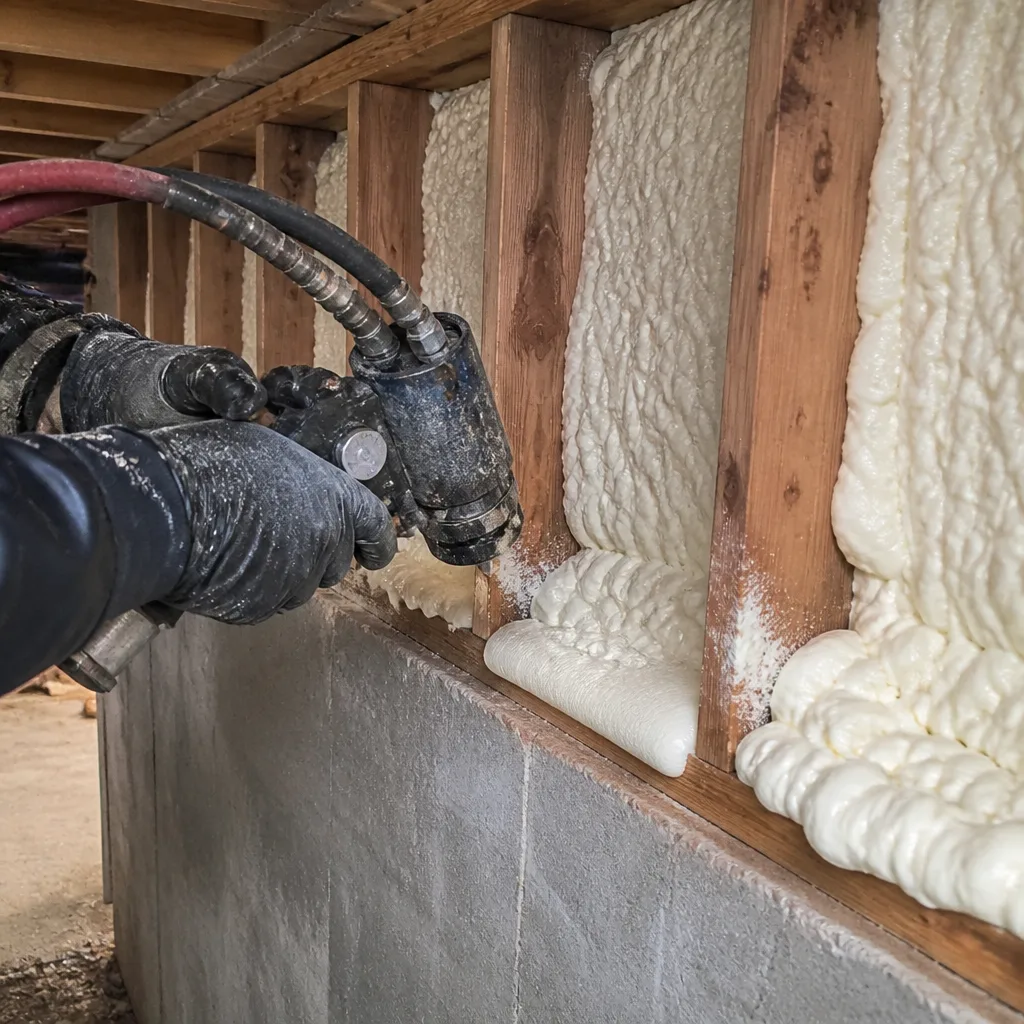
Closed Cell Spray Foam Insulation is the higher-density option we install frequently in Mayflower Village because it adds structural rigidity and acts as a vapor barrier, both of which matter on older homes with low-pitch roofs and original framing. For a 1,200-square-foot attic, closed-cell work in Mayflower Village typically runs $3,800 – $5,800. The job involves cleaning out failed insulation, assessing wiring (closed-cell foam cannot encapsulate knob-and-tube conductors), then spraying 2 – 3 inches of foam to the sloped ceiling or roof deck. In hot, dry summers where attic temperatures push past 140°F, closed-cell holds its R-value better than just about anything.
Roof deck applications
We often recommend closed-cell foam on the roof deck itself for Mayflower Village homes with unvented attics or HVAC equipment up there. It seals the thermal boundary at the roof line instead of the attic floor. That keeps ductwork from baking in the heat and stops conditioned air from leaking out through every gap.
When wiring comes first
If we find active knob-and-tube, we pause the spray. You’ll need an electrician to re-wire first. It’s a sequencing step that surprises people, but skipping it creates a code violation and a fire risk you don’t want buried under foam.
Open Cell Spray Foam in Mayflower Village
Open Cell Spray Foam is the lighter, more affordable foam we install in Mayflower Village attics where airflow and sound control matter more than maximum R-value per inch. Expect to pay $2,200 – $3,800 for a typical 1,200-square-foot attic. Open-cell expands aggressively, which makes it great for sealing odd corners and rim joists in older homes where framing isn’t perfectly square. It’s vapor-permeable though, so on roof deck applications it needs careful detailing to avoid moisture issues in our dry, hot climate. For attic floor applications in 91006, it’s a workhorse.
Air sealing first
Before open-cell goes in, we address baffles and air-seal penetrations. On those tight 1940s bungalows off Mayflower Road, there’s often barely enough room to get a hand between the top plate and the roof sheathing. We’re used to working in those cramped spaces, and we don’t skip the prep just because it’s awkward.
Sound and comfort
Homeowners near Mayflower Village’s busier streets tell us open-cell helps with road noise. It also does a solid job keeping rooms that stay the temperature you set, especially once the old settled insulation is gone and the foam fills every cavity.

Trusted Brands We Service in Mayflower Village
We install Icynene and Demilec spray foam products because both brands are specified in high-performance building envelopes, not just entry-level jobs. When a Mayflower Village homeowner wants open-cell, we’ll often spec Icynene for its proven air-sealing performance. For closed-cell roof decks, Demilec gives us a dense, durable foam that stands up to San Gabriel Valley heat. We also carry GreenFiber cellulose and Owens Corning fiberglass for homeowners who decide blown-in or batt insulation fits their budget better. The right insulation for your home, not the easiest one to install. That’s the whole approach.
Common Spray Foam Insulation Problems We See in Mayflower Village Homes
- Knob-and-tube wiring hidden under old insulation. In pre-1950 homes, live knob-and-tube is still common, and spraying closed-cell foam over it is a genuine fire and code risk. We always flag it before spraying, and we’ll coordinate with a licensed electrician to get the re-wire done first.
- Settled, contaminated insulation that never got cleaned out. Decades of rodent nesting, dust, and compression flatten old fiberglass batts and cellulose. Foaming over it traps odors and cuts R-value; a cleanout is often step one in Mayflower Village attics.
- Low-pitch roofs leaving no room for baffles. On 1940s and 1950s bungalows, the gap between the top plate and the roof sheathing can be nearly nonexistent. If baffles and air-sealing get skipped because it’s cramped, the roof deck cooks and the foam underperforms.
- Attic access hatches too small for equipment. Tight access is common in Mayflower Village’s older homes. We’re equipped for it, but it’s one more reason a specialist who knows these houses beats a generalist crew that only works in wide-open newer attics.
Pricing for Spray Foam Insulation in Mayflower Village, CA
Open-cell spray foam in Mayflower Village typically runs $1.80 – $3.20 per board foot installed. Closed-cell runs $2.50 – $4.80 per board foot. A full attic job lands between $2,200 and $5,800, depending on square footage, foam depth, and whether we’re doing a cleanout or coordinating a re-wire first. Rim joist spray foam is usually $900 – $1,800, and garage ceiling spray foam runs $1,200 – $2,600. Foam type, access difficulty, and the condition of what’s already up there all move the number. Call (877) 265-9918 for a free estimate, and Nate Cervantes will give you a real number, not a vague range.
We Also Serve Cities Near Mayflower Village
Our crews cover Mayflower Village along with spray foam insulation in Mayflower Village neighbors in Arcadia, Monrovia, Sierra Madre, and North El Monte. Same specialist, same brand lineup, same honest attic assessment whether we’re off Mayflower Road or across the 210. If your home is in 91006 or just outside it, call (877) 265-9918 and we’ll schedule a visit.
Serving Mayflower Village, CA — Our Local Coverage Area
We’re based in the Mayflower Village area and know this community well. Use the map below to see our service coverage — if you’re nearby, we can almost certainly help.
FAQs About Spray Foam Insulation in Mayflower Village
No, you cannot safely spray closed-cell foam over live knob-and-tube wiring. The foam encapsulates the conductors, which creates a fire risk and a code violation. In Mayflower Village, where many pre-1950 homes still have original knob-and-tube in the attic, we bring in a licensed electrician to re-wire the affected circuits before any foam goes down. Call (877) 265-9918 and we’ll inspect what’s actually in your attic before committing to anything.
Because most Mayflower Village homes predate the 1978 energy code, and the original fiberglass batts or loose-fill cellulose have had decades to settle, compact, and attract rodents. Foaming over contaminated insulation traps odors, cuts the foam’s effective R-value, and hides problems you’ll regret later. A cleanout lets us see the roof deck, check for wiring issues, and start from a clean surface.
It absolutely does. Low-pitch roofs leave very little room for baffles and air-sealing work at the eaves, and the attic access hatches on these homes are often tight. We’re used to working in those cramped conditions, and we don’t skip ventilation details just because they’re hard to reach. That’s the difference between a foam job that performs and one that traps heat against the roof deck.
For roof deck applications and unvented attics in Mayflower Village, closed-cell usually wins because it adds structural strength and acts as a vapor barrier. For attic floors and air sealing in older homes, open-cell is often the right value. The house decides, not the product we happen to stock.
Yes, especially when the current insulation is settled or missing entirely. Summer temps in the San Gabriel Valley foothills routinely exceed 95°F, and attics bake. Sealing the thermal boundary with spray foam stops conditioned air from leaking out and keeps your AC from running constantly. Homeowners off Mayflower Road report back bedrooms finally holding cool through August afternoons after we spray. Call (877) 265-9918 for an honest assessment of your home’s specific losses.
Written by Nate Cervantes, Owner at Hometown Insulation Co, serving Mayflower Village and the surrounding San Gabriel Valley.