


Fast, Reliable Attic Insulation Across Corona
Attic insulation in Corona typically costs $1,800 to $4,900 for a full removal-and-replacement on a two-story tract home, and most jobs are completed in a single day. Hometown Insulation Co has worked attics from the 92882 streets near downtown through the newer 92883 hillside developments, so we know how quickly a Corona attic turns hostile in summer. Call (877) 265-9918 for a free estimate and we’ll measure your actual attic depth before quoting anything.
Corona sits at the junction of three climate zones. The valley floor bakes under inland heat, the Santa Ana corridor drives wind through every ceiling penetration, and the foothill edges up toward the Cleveland National Forest cool down hard at night. A house in the 92881 corridor west of the 15 deals with a different attic than a single-story off Sixth Street. That’s why we never quote Corona insulation over the phone without seeing the attic. Our team drives into Corona daily, and we can usually be at your door within 24 to 48 hours of your call.
Why Hometown Insulation Co Is Corona’s Preferred Attic Insulation Company
Insulation is all we do. We’re not a general contractor splitting our attention between roofing and HVAC. Every technician who steps into a Corona attic spends their whole week in attics, and that pattern recognition matters when you’re looking at settled fiberglass in a 1997 tract home off Ontario Avenue. Our customers in Corona consistently mention two things in their feedback: we show up when we say we will, and we explain the material options without pushing whatever is easiest for the crew to install.
Nate Cervantes built Hometown Insulation Co around a simple idea. The right insulation for your home, not the easiest one to install. That philosophy shows up in how we approach a typical Corona estimate. We start with a depth check and an air-seal evaluation, then talk through materials that match the home’s orientation, roof pitch, and build era. For homes in the 92880 and 92881 corridors, that conversation usually starts with why the builder-grade blown fiberglass has underperformed for the last decade. For older single-story homes near downtown, it starts with what’s missing entirely.
Attic Cleaning Services in Corona
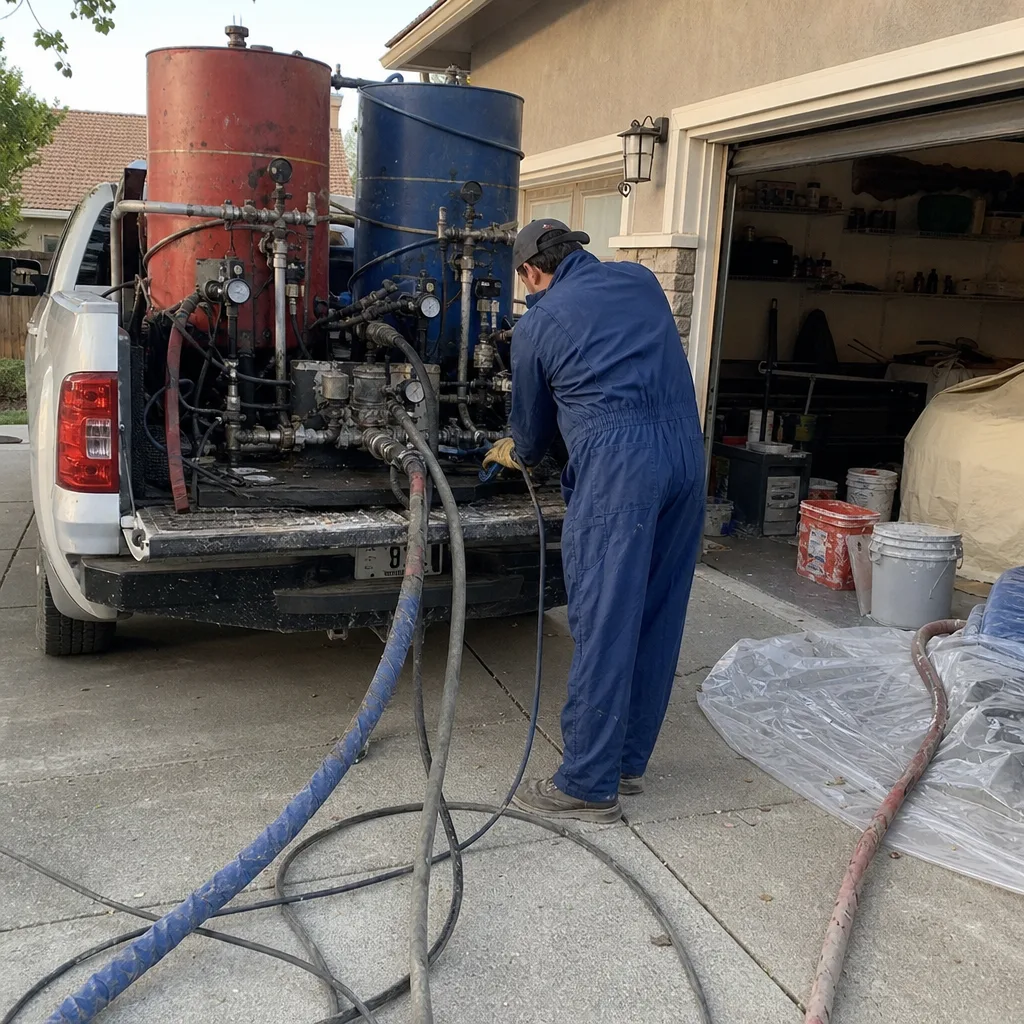
Attic Cleaning Services in Corona start around $450 to $900 for a standard two-story tract home, depending on attic footprint and how much debris and old insulation needs to come out. In Corona’s 1990s and 2000s subdivisions, we’re typically removing two decades of rodent nesting, dust, and compressed fiberglass before any new material goes in. You need cleaning before adding insulation when the existing layer is contaminated, settled beyond recovery, or simply too thin to build on.
Removal of Settled or Contaminated Insulation
Many Corona attics in the 92880 and 92881 ZIP codes have blown fiberglass that’s settled to five or six inches and absorbed years of dust and pest activity. We vacuum out the old material, bag it, and prep the attic deck for fresh insulation. This step matters because adding new insulation on top of compressed, contaminated material locks in the problem.
Debris and Rodent Sign Removal
Corona’s open-space edges and foothill lots mean rodents find their way into attics through gable vents and roof junctions. We clear out nesting material and droppings before insulating, and we flag the entry points so a pest professional can close them. Insulating over rodent sign just preserves it under the new layer.
What happens when you call
- 1
A real person answersNo phone trees — you reach a local pro.
- 2
You get an upfront price rangeHonest numbers before anyone is dispatched.
- 3
A background-checked tech heads outLicensed & insured, dispatched right away.
- 4
You approve before work beginsNothing starts until you say go.
Attic Mold Removal in Corona
Attic Mold Removal in Corona runs $800 to $2,200 depending on the affected square footage and whether the mold is surface-level or has penetrated the roof sheathing. In Corona specifically, we see attic mold most often in two scenarios: east-side tract homes where bathroom fans vent directly into the attic cavity, and older downtown homes with inadequate ridge or soffit ventilation. The inland heat doesn’t cause mold, but it accelerates the conditions that let it take hold.
Ventilation Correction Before Treatment
We won’t treat mold without checking why it grew. In most Corona attics, the root cause is a ventilation shortfall or a disconnected bath fan. We correct the airflow issue first, then treat the affected wood and replace any insulation that absorbed moisture. Otherwise the mold comes back the next hot season.
Surface Treatment and Sheathing Protection
For surface mold on roof sheathing, we apply a treatment designed for attic wood and let it dry thoroughly before installing new insulation. In severe cases where sheathing is compromised, we refer you to a licensed mold remediation specialist. Our job is making sure the attic is dry, ventilated, and ready to hold insulation for the long term.
Trusted Brands We Service in Corona
We carry Owens Corning and Johns Manville fiberglass for most Corona attics because those products hold their loft well in the heat and are easy to verify for depth after installation. For homeowners who want recycled-content material, we stock GreenFiber cellulose, which also does a better job slowing air movement through the attic floor. Corona customers don’t wait on special-order parts from our shop. We keep these products in stock and scheduled for Corona jobs every week, so material availability rarely delays a start date. The brand conversation happens after we check your attic, not before.

Common Attic Insulation Problems We See in Corona Homes
Corona’s housing stock has some predictable failure patterns. Here are the four we walk into most often:
- Settled builder-grade blown fiberglass in east-side tracts. Homes built in the 1990s and 2000s off Foothill Parkway, Ontario Avenue, and in the 92880/92881/92883 corridors typically have fiberglass that’s compressed to R-11 to R-19 after two decades. The wide, low-clearance attic bays make it easy for the material to settle unevenly, leaving hot and cold spots across the ceiling plane.
- Unsealed top plates and recessed fixtures leaking air. Santa Ana winds find every gap around ceiling penetrations in two-story stucco-and-tile homes. That air movement pulls conditioned air out of the living space and pushes attic heat down, undermining whatever insulation is still there.
- Radiant heat gain through unshaded tile roofs. South- and west-facing roof slopes in Corona get brutal afternoon sun. Attic temperatures spike well past outdoor highs, and fiberglass alone can’t stop that radiant load from reaching the ceiling. This is where air sealing and depth corrections make the difference.
- Minimal or absent insulation in original downtown homes. The older single-story stock near the center of Corona often has nothing more than a thin fiberglass roll from decades ago, or bare ceiling joists. These houses need a full strategy, not a top-up.
Pricing for Attic Insulation in Corona, CA
For an east-side two-story tract home in the 92881 or 92883 corridor, full attic insulation replacement after removal and cleaning runs $2,400 to $4,900. A straight top-up over existing insulation without removal typically lands between $900 and $1,800. Old downtown single-story homes with small attics often come in under $1,200 for a first-time insulation install. What moves the price: attic square footage, accessibility, how much old material needs to be removed, and whether we need to correct ventilation or baffles before insulating. Call (877) 265-9918 for a free on-site estimate. We measure, we look at the ventilation, and we give you a written quote before any work starts.
One pattern worth knowing: in the 92880 and 92881 corridors, we routinely find attics measuring R-11 to R-19 when the modern target for Riverside County is significantly higher. The builder installed just enough to pass code at the time, and twenty years of settling did the rest. A depth check is the first thing we do on every Corona estimate, and it’s usually the moment the homeowner understands where their energy bill went.
On a two-story tract home off Foothill Parkway in the 92881 corridor, our crew found builder-grade blown fiberglass settled to roughly six inches with the original R-value long gone, while the tile roof had baked the attic cavity through the last Santa Ana wind event. We air-sealed the ceiling plane first, then blew Owens Corning fiberglass back up to a modern target and confirmed uniform depth across the wide, low-clearance bays before we pulled the ladder. The homeowner’s upstairs bedrooms stopped cooking by late afternoon.
We Also Serve Cities Near Corona
Hometown Insulation Co serves Attic Insulation in Corona and the surrounding communities, including Home Gardens, El Cerrito Corona, Eastvale, and Norco. If you’re just outside the Corona city line, call us anyway. Our service area covers the full inland corridor and our technicians are on the road across the region daily. We also maintain a full Attic Insulation service hub for homeowners researching material options and installation methods.
Serving Corona, CA — Our Local Coverage Area
We’re based in the Corona area and know this community well. Use the map below to see our service coverage — if you’re nearby, we can almost certainly help.
FAQs About Attic Insulation in Corona
Builders in the 1990s and 2000s east Corona tracts installed the code minimum for the era, typically blown fiberglass at five to six inches. Two decades of settling, heat cycling, and Santa Ana wind pressure have compressed that material significantly. We measure R-11 to R-19 in most of these attics today, against a modern target that’s much higher. The fix is a depth check, air sealing, and blowing the cavity back up to current standards. Call (877) 265-9918 to schedule a free measurement.
Yes. Valley-floor homes in the 92882 and 92877 areas deal mostly with sustained summer heat and radiant gain, while foothill-edge homes up toward the Cleveland National Forest also get cold winter nights and more wind exposure. Orientation matters too. A south-facing tile roof off Main Street takes more heat than a north-facing one near Green River Road. We spec materials and depths to the home’s specific zone, not a blanket number for all of Corona.
Yes, that’s a standard part of our work in Corona. We vacuum out the old compressed or contaminated fiberglass, bag it, and prep the attic deck. Cleaning first is required when the existing material is rodent-contaminated, mold-damaged, or too far gone to build on. It’s also the right call when an attic has never been cleaned since the home was built. We’ll tell you honestly whether removal is necessary or whether a top-up makes more sense.
In Corona, attic mold almost always traces back to a ventilation problem: a bathroom fan venting into the attic cavity, blocked soffit vents, or insufficient ridge ventilation. The inland heat doesn’t cause mold on its own, but it creates the warm, stagnant environment mold needs. Remove it when you see dark staining on roof sheathing or smell mustiness in the attic. Insulating over mold just hides the problem. Call (877) 265-9918 and we’ll inspect and quote the fix.
A two-story tract home in the 92880, 92881, or 92883 corridors should carry insulation meeting current Riverside County energy standards, which for most attics means R-38 or higher depending on the material. Many of these homes sit at roughly half that. We check your current depth, air-seal the ceiling plane, then bring the attic up to a level that holds through both the July heat and the Santa Ana swings.
Written by Nate Cervantes, Owner at Hometown Insulation Co, serving Corona and the surrounding inland communities.
Ready to stop paying for air that leaks out of your attic? Call Hometown Insulation Co today at (877) 265-9918 for a free, no-pressure estimate. We’ll measure your attic, show you what’s there, and give you a straight answer on what it needs.