
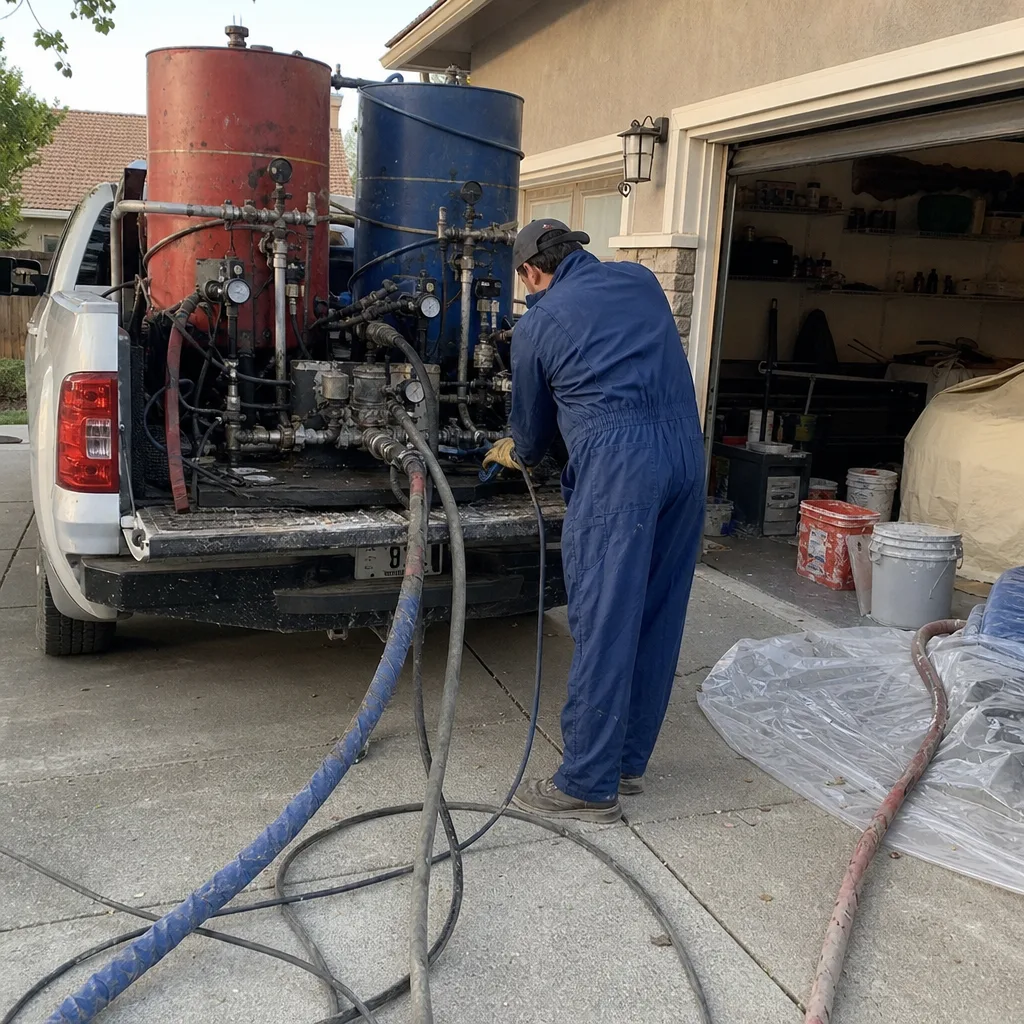
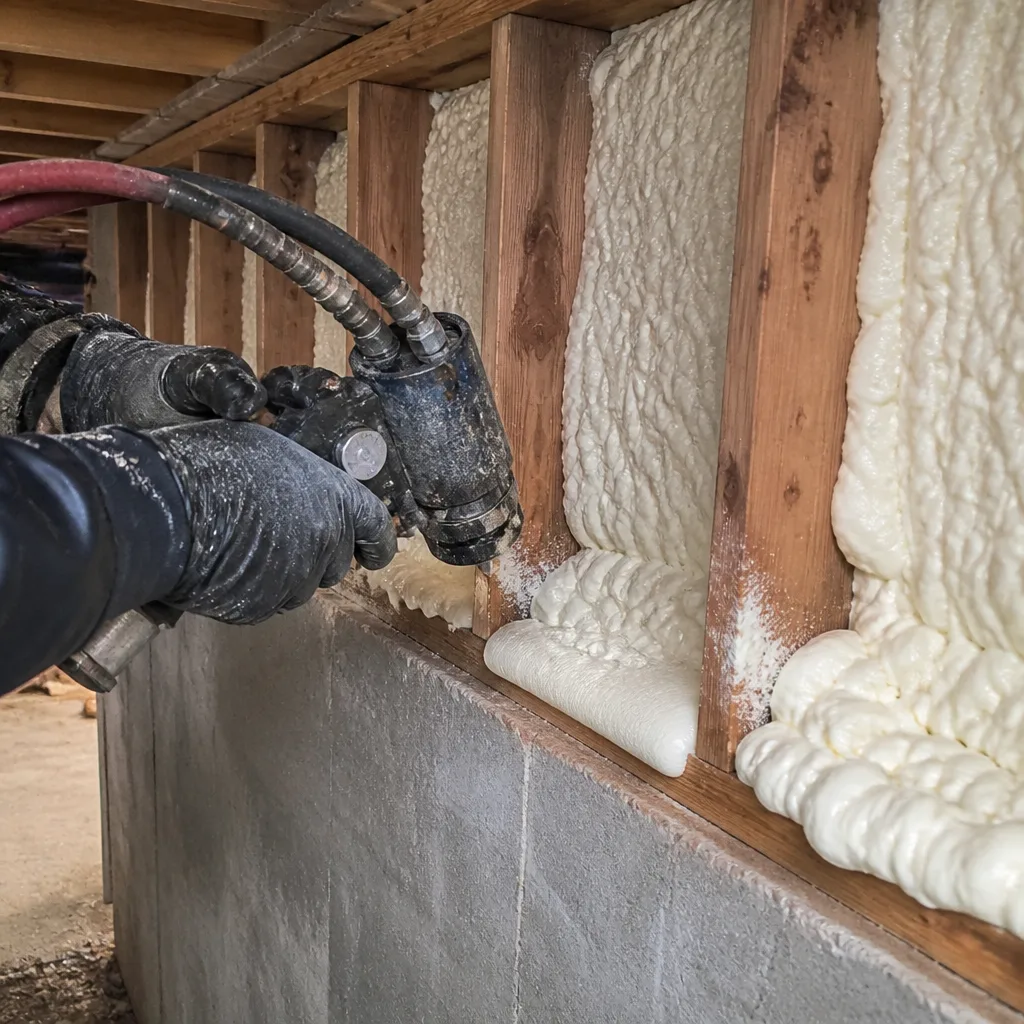
Fast, Reliable Spray Foam Insulation Across Portola Hills
Spray foam insulation in Portola Hills runs $2.50 to $6.50 per square foot installed, and most jobs are completed in one to two days. The 92610 hillside homes here rarely need a full gut-rehab approach. What they need is a specialist who knows that a 1990s stucco two-story on a sloped lot behaves differently than a single-story in Foothill Ranch. We’re Hometown Insulation Co, and insulation is all we do. Call (877) 265-9918 for a straight answer and a free estimate.
Our crews work Portola Hills every week. We know the canyon-rim streets, the concrete-tile roof access problems, and the way Santa Ana winds push heat into attics that were never air-sealed properly in the first place. When you call, you’ll talk to someone who has actually stood in an attic off Saddleback Ranch Road and seen the same sagging fiberglass you’re dealing with. That local knowledge means our diagnosis is faster, our price is accurate, and we don’t waste your time with guesses.
Why Hometown Insulation Co Is Portola Hills’s Preferred Spray Foam Insulation Company
Homeowners in Portola Hills tend to do their homework. They’ve read about open-cell versus closed-cell foam. They know their energy bills are higher than they should be. And they’re tired of contractors who show up pushing whatever product is easiest to install that week. That’s where our specialist approach changes the conversation. We carry eight insulation brands, but we lead with the one that fits your home, not the one that pads our margin.
Nate Cervantes started this company on a simple principle: the right insulation for your home, not the easiest one to install. That means our Spray Foam Insulation team sizes up the attic, the wall cavities, the roofline, and the ventilation before we ever quote a price. It also means we’re honest when spray foam isn’t the answer. Sometimes a Portola Hills townhome needs Rockwool for fire resistance or GreenFiber cellulose for recycled-content savings. We’ll tell you that.
Response time matters when your upstairs bedrooms hit 85 degrees during a Santa Ana event. Our crews reach most Portola Hills neighborhoods within a day or two of the estimate. We’re not a roofing company that does insulation on the side. Every tech on the truck is trained on spray foam specifically, with a focus on the airflow and moisture issues that canyon-rim homes in 92610 face every season.
Spray Foam Attic Insulation in Portola Hills
Spray Foam Attic Insulation in Portola Hills homes is the highest-impact upgrade most owners in 92610 can make, because the original fiberglass batts installed in these 1980s and 1990s houses compress, sag, and displace over time, leaving gaps that let conditioned air escape and radiant heat pour in. The job involves air-sealing top plates, can lights, and ceiling penetrations, then applying foam to the attic deck or roofline to create a thermal and air barrier in one pass.
For a typical two-story Portola Hills home with a concrete-tile roof, expect to pay $4,800 to $9,500 for a full attic spray foam job depending on square footage and how much old insulation needs removal first. That’s the honest range in this market. Homes with cathedral ceilings or complicated stepped roof lines run higher, while simpler townhome attics run lower.
Attic Deck vs. Floor Application
Most Portola Hills attic jobs benefit from applying foam to the underside of the roof deck, especially in newer neighborhoods closer to the canyon rim where Santa Ana winds push heat through the roof during fall months. In homes with shorter ceilings and flat attic floors, we sometimes recommend treating the attic floor instead. The choice depends on where your ductwork lives and how much attic space holds the heat that’s currently baking your upstairs rooms.
Working Around Tight Concrete-Tile Roof Access
Concrete-tile roofs common across Portola Hills villages make attic access tight and hot to work. Our techs bring the right equipment and know the maneuver issues before they arrive. That means we don’t need to remove tiles or cut new access openings in most cases. We verify thickness with probing tools because thin spots in foam compromise thermal performance, and on a concrete-tile roof you can’t just peel back a shingle to check the work.
Spray Foam Wall Insulation in Portola Hills
Spray Foam Wall Insulation in Portola Hills addresses a problem most homeowners discover only when they renovate: the original wall cavities in these 1990s-era stucco homes are often under-insulated, especially on walls facing the hillside where marine-layer moisture works its way into the framing. The job involves removing a section of drywall or sheathing, inspecting the existing cavity, and applying foam that fills gaps and seals against air movement and condensation.
Cost for wall work in Portola Hills typically falls between $2.50 and $5.00 per square foot of wall area for open-cell foam, or $4.00 to $6.50 for closed-cell, which is the right choice when moisture blocking matters. Because homes here are built on sloped lots, wall heights vary and some cavities are irregular. That means we map each bay before we spray so coverage is complete, not just visually acceptable.
Closed-Cell vs. Open-Cell for Hillside Walls
For thin walls facing the hillside, closed-cell spray foam is the right call. It blocks vapor and prevents condensation behind the stucco, which open-cell can’t do as effectively. In interior walls or second-story rooms away from the slope, open-cell is often sufficient and costs less. We carry Icynene and Demilec products in both categories, so the recommendation is driven by your wall’s exposure, not by what’s on the truck.

When Renovation Opens the Opportunity
Portola Hills homeowners doing kitchen or bathroom remodels often find the wall cavities are empty or hold crumbly, degraded fiberglass. That’s the moment to spray before the drywall goes back up. We’ve done this on enough hillside remodels to know exactly how to work around existing plumbing and electrical without overspray problems. The result is a wall that stops losing conditioned air and keeps moisture where it belongs: outside.
Trusted Brands We Service in Portola Hills
We stock and install Icynene and Demilec spray foam products for Portola Hills jobs, because those are the performance-tier brands used in high-performance building envelopes. For homeowners who need Reflectix repair in Portola Hills, we can assess whether radiant barrier or alternative solutions fit your home’s needs. For homeowners who prefer fiberglass or mineral wool for certain applications, we also carry Owens Corning, Johns Manville, Knauf, and Rockwool. And for recycled-content cellulose, we offer GreenFiber. Most insulation crews in this area install one brand and call it a day. We carry multiple so we can match material to your home’s actual needs, not to a supplier contract.
Common Spray Foam Insulation Problems We See in Portola Hills Homes
- Compressed original fiberglass batts. In nearly every 1990s Portola Hills home we open up, the original batts are matted down from years of HVAC service and re-roofing activity. When we spray foam over or in place of that, we first air-seal the top plates and penetrations, then remove or bypass the compressed material so the foam creates a continuous thermal barrier rather than trapping moisture against the old insulation.
- Santa Ana wind-driven ember intrusion. Unsealed attic vents and soffits on canyon-rim streets let embers pour in during wind events. We address this with ember-resistant detailing: sealing attic vents, using intumescent-coated spray foam when required, and installing vent covers that meet wildfire zone standards. Inland cities like Riverside or Corona don’t face this with the same urgency.
- Incomplete coverage in stepped ceiling cavities. Sloped lots create cantilevered rooms and stepped ceiling lines with irregular cavities where spray foam is often missed by less experienced crews. We map each bay before application so thin spots don’t become thermal bypasses. This is a pattern we see repeatedly along the canyon-rim streets in 92610.
- Thin walls with marine-layer moisture. Hillside-facing walls absorb moisture from the marine layer that settles into these canyons overnight. Without closed-cell spray foam, condensation forms behind the stucco, which leads to mold and framing damage over time. We recommend closed-cell for south- and west-facing hillside walls and inspect for existing moisture before spraying.
Pricing for Spray Foam Insulation in Portola Hills, CA
Here’s the honest breakdown for Portola Hills. Open-cell spray foam in an attic runs $2.50 to $4.50 per square foot. Closed-cell runs $4.50 to $6.50 per square foot. Wall applications fall in the $2.50 to $6.50 range depending on foam type and cavity complexity. A full attic job in a typical 1,800 to 2,400 square foot Portola Hills two-story lands between $4,000 and $9,500. A single hillside wall during a remodel might cost $600 to $1,800.
What moves the price is access difficulty, old insulation removal, intumescent coatings for wildfire zone compliance, and whether we’re working around concrete-tile roof penetrations that require extra verification. Estimates are free, and we’ll give you a number you can plan around, not a vague range that shifts after the job starts. Call (877) 265-9918 to schedule a walkthrough.
On a 1990s two-story stucco home in the Canyon Crest village, we found original fiberglass batts in the attic compressed to less than half their thickness, sagging around HVAC equipment and displaced near the concrete-tile roof penetrations. After air-sealing the top plates and can lights, we applied two inches of Icynene spray foam to the attic deck, restoring R-value and eliminating the radiant-heat gain that had been baking the upstairs bedrooms during Santa Ana events. That’s the kind of specific, house-by-house work that makes the difference here in Portola Hills.
Portola Hills is a master-planned community of hillside villages built mostly from the late 1980s into the 2000s, so insulation work here is dominated by retrofitting and upgrading original builder-grade fiberglass in two-story stucco homes on sloped lots. The steep terrain and canyon-edge exposure mean the same attic that bakes in a Santa Ana wind event is also the one shedding heat on cool canyon nights. That’s why radiant-barrier and air-sealing details matter more here than raw R-value alone. A spray foam job that doesn’t address air movement simply won’t keep these rooms comfortable, no matter how thick the foam is.
We Also Serve Cities Near Portola Hills
Our crew works throughout the hills around Portola Hills, including Spray Foam Insulation in Portola Hills and the surrounding communities. We regularly take on jobs in Foothill Ranch, Lake Forest, Trabuco Canyon, and Rancho Santa Margarita. If you’re in one of those areas and dealing with a hot attic or drafty walls, the same crew and the same pricing applies.
Serving Portola Hills, CA — Our Local Coverage Area
We’re based in the Portola Hills area and know this community well. Use the map below to see our service coverage — if you’re nearby, we can almost certainly help.
FAQs About Spray Foam Insulation in Portola Hills
Spray foam helps in two ways: it seals the attic vents and soffits where wind-driven embers enter, and when intumescent-coated foam is used, it provides a fire-resistant layer that slows ember ignition. In Portola Hills’ wildfire zone, this dual function matters because the same attic that gains radiant heat during a Santa Ana event is also vulnerable to ember intrusion. We recommend intumescent-coated foam for any canyon-rim home, and we install vent covers that meet current wildfire standards. Call (877) 265-9918 to discuss whether your home is in the ember-prone zone.
No. The original fiberglass in 1990s Portola Hills homes is almost always compressed, sagging, or displaced, and spraying foam directly over it creates a moisture trap and an uneven thermal barrier. We remove or bypass the old material, air-seal the top plates and penetrations, then apply foam directly to the deck or floor. This is the most common remediation we do in 92610, and it’s the only way to get the thermal performance you’re paying for. Call (877) 265-9918 for a free attic or wall inspection.
Closed-cell spray foam works best for hillside-facing walls in Portola Hills homes. It blocks vapor and prevents condensation behind the stucco, which open-cell cannot do as effectively when the marine layer settles into the canyons. We carry Icynene and Demilec closed-cell products specifically for this application. For interior or second-story walls away from the slope, open-cell is often sufficient and less expensive.
We map the attic bays before spraying and use probing tools to verify foam thickness after application. Concrete-tile roofs common across Portola Hills make attic access tight and hot to work, and you can’t inspect coverage from the exterior like you can with an asphalt shingle roof. That’s why we spend extra time verifying thickness with a probe, especially around roof penetrations and along the eaves where thin spots are most common. Call (877) 265-9918 for a free attic inspection, and we’ll show you exactly what’s up there.
Spray foam itself requires very little maintenance, but in Portola Hills’ coastal-influenced climate, you should inspect the vent sealing and intumescent coating every few years, especially after severe Santa Ana wind events. Ember intrusion is a seasonal risk here, and vent covers can degrade from sun and wind exposure faster than the foam itself. We offer maintenance inspections and can reapply intumescent coatings if needed. Call (877) 265-9918 to schedule a checkup.
Written by Nate Cervantes, Owner at Hometown Insulation Co, serving Portola Hills and the surrounding hillside communities. Insulation is all we do.