
Crawl Space Spray Foam Insulation in Santa Fe Springs
Crawl Space Spray Foam Insulation in Santa Fe Springs addresses a problem most homeowners in the 90670 and 90671 zip codes don’t discover until the floor above feels cold in January or a musty odor drifts up through the baseboards. The job involves sealing the crawl space perimeter with spray foam to stop ground moisture, block exterior air, and keep the conditioned air from your HVAC system from leaking out through the floor assembly. In Santa Fe Springs, where many of the mid-century tract homes sit on raised foundations with open venting, a typical crawl space encapsulation and spray foam application runs $2,800 – $5,200 depending on square footage, access height, and whether we’re also addressing duct lines running through the space.
What the work actually involves
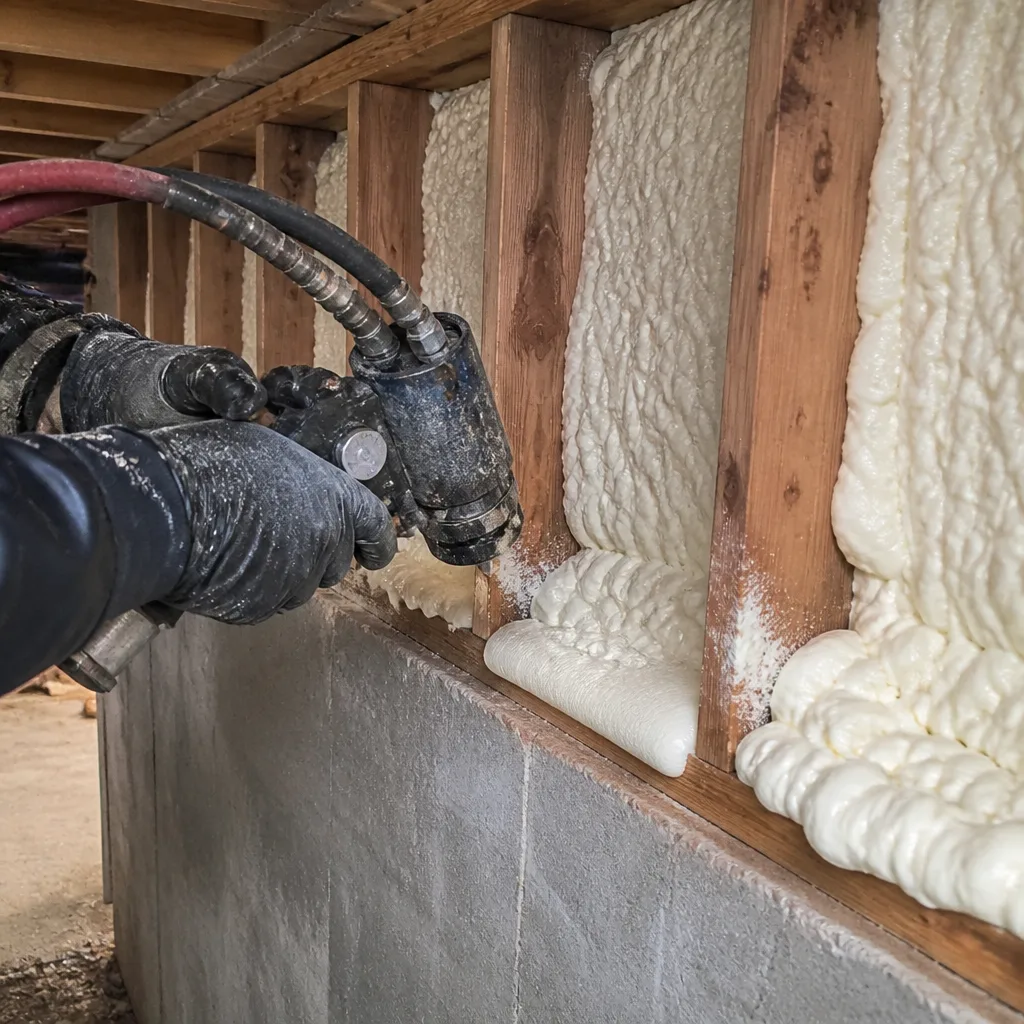
We seal the rim joist bays, the sill plate transition, and any penetrations where plumbing or electrical lines pass through the foundation wall. In the older homes off Lakeland and Telegraph roads, we often find foundation vents that have been letting damp air in for sixty-plus years. Spray foam is the material that actually stops that air movement, unlike the fiberglass batts that sag and leave gaps.
When a Santa Fe Springs homeowner needs it
If your floors are cold over the crawl space in winter, or you’re seeing condensation on ductwork under the house during the inland heat spells, the crawl space is working against your air conditioner. And for homes on the residential pocket streets with original floor framing, closed-cell foam also stiffens the structure and cuts the low-frequency rumble from trucks rolling through the industrial corridors at night.
For a firm price on crawl space work in Santa Fe Springs, call (877) 265-9918. We’ll inspect before we quote.
Garage Spray Foam Insulation in Santa Fe Springs
Garage Spray Foam Insulation in Santa Fe Springs is one of the highest-return projects we do in this city, because the garage here is rarely just a parking spot. It’s a workshop, a home gym, or a buffer wall between a bedroom and a hot west-facing wall. The job involves applying spray foam to the garage ceiling, the shared wall between the garage and living space, and often the exterior garage walls if they’re uninsulated. A typical attached garage in Santa Fe Springs, including the ceiling and the common wall with the house, runs $1,900 – $4,400 depending on ceiling height, access, and whether the existing drywall stays in place.
Rail noise and the attached garage
Santa Fe Springs has active rail lines running through the center of the city, and the garages on the streets nearest the tracks absorb that noise like a drum. Closed-cell spray foam on the garage ceiling and the wall facing the tracks acts as both an air seal and a sound dampener. It won’t eliminate a train horn, but it does knock down the rail-wheel rumble and the overnight switching noise in a way fiberglass batts simply don’t.

Heat control in a west-facing garage
In the summer months when Santa Fe Springs sits above 95°F for days at a time, the garage ceiling becomes a radiant panel pushing heat down into the room. Spray foam on the roof deck or the ceiling plane cuts that heat transfer dramatically. If the garage shares a wall with a finished bedroom, that shared wall needs the same treatment, which is why we ask about how the space is actually used before we spec a foam thickness.
Call (877) 265-9918 to schedule a garage measurement. We’ll tell you what needs sealing and what can stay as-is.
Serving Santa Fe Springs, CA — Our Local Coverage Area
We’re based in the Santa Fe Springs area and know this community well. Use the map below to see our service coverage — if you’re nearby, we can almost certainly help.
FAQs About Spray Foam Insulation in Santa Fe Springs
Yes, and we do it regularly for homes along the southern and central residential streets near the BNSF and Union Pacific lines. Closed-cell foam applied to the garage ceiling and the wall facing the tracks reduces airborne sound transmission and seals the assembly so noise doesn’t flank through gaps. Typical cost for a rail-side garage noise treatment in Santa Fe Springs runs $1,900 – $3,800 depending on the garage footprint. Call (877) 265-9918 for a measurement.
It is if it’s installed over unaddressed knob-and-tube wiring or without evaluating what’s inside the existing wall cavities. Many of the 1940s – 1960s tract homes in Santa Fe Springs still have original wiring, and foam encasing live legacy conductors creates a heat and code issue that’s costly to correct later. When we work in those homes, we inspect first, coordinate with an electrician where needed, and only then spray. The foam itself isn’t the problem; skipping the inspection is.
It absolutely makes sense, and in Santa Fe Springs the commercial and industrial demand for spray foam is stronger than the residential side. Closed-cell foam applied to a metal roof deck stops condensation from forming on the underside of the steel, reduces heat load inside the building, and adds a sound-attenuation layer for facilities near the rail spurs or the 5 and 605 corridors. We spec Demilec closed-cell for these decks because of its vapor-control properties. The project economics are different than a house, so we quote those on inspection.
Yes, because inland LA Basin heat like Santa Fe Springs gets in July and August attacks a house through the attic, the walls, and the floor cavities. Spray foam seals the air leaks those other insulation types leave open, so the conditioned air your HVAC makes actually stays in the rooms you’re cooling. Homeowners tell us rooms that used to run five to eight degrees warmer in the afternoon now hold closer to the thermostat setting. Call (877) 265-9918 for an honest read on where your house is losing air.
Yes, and those two areas are where the mid-century tract homes in Santa Fe Springs lose most of their energy performance. Crawl space work seals the underside of the house against moisture and air movement. Garage work seals the largest uninsulated surface attached to the living space and handles the rail, truck, and freeway noise that defines this city’s sound profile. We’re in the 90670 and 90671 zip codes on a regular basis.