
Fast, Reliable Spray Foam Insulation Across Rialto
Spray foam insulation in Rialto means sealing a home against 100°F-plus summer heat and the dry Santa Ana winds that push hot air through the Cajon Pass. Hometown Insulation Co sends trained spray foam crews into Rialto neighborhoods every week, and we know exactly what the older 92376 tract homes and newer 92377 subdivisions need. Most Rialto jobs take one to two days, and we schedule around your family, not the other way around. If your attic turns into an oven by noon or your air conditioner runs nonstop from June through October, call (877) 265-9918 and we’ll walk through what’s actually wrong before anyone sprays a drop.
Why Hometown Insulation Co Is Rialto’s Preferred Spray Foam Insulation Company
We’re not a general contractor who picked up a foam rig last year. Insulation is all we do, and Rialto homeowners call us because we speak the language of this valley: heat-barrier work, attic ventilation, and sealing the gaps that let conditioned air escape. Nate Cervantes started this company with a simple rule: match the material to the home, not to whatever’s sitting in the warehouse. For Rialto that usually means open-cell foam in legacy attics, closed-cell where moisture or structure demands it, and honest answers about what doesn’t need spraying.
Our crews know the difference between a 1967 single-story stucco home off Willow Avenue and a 2003 two-story north of the 210. That local knowledge changes how we bid the job, how we prep the attic, and how long the work takes. We also stock the brands Rialto homes actually benefit from: Spray Foam Insulation products from Icynene and Demilec, plus GreenFiber cellulose and Owens Corning batts for hybrid assemblies. When you call, you’re talking to someone who’s foamed attics in your zip code, not a call center reading scripts.
Open Cell Spray Foam in Rialto
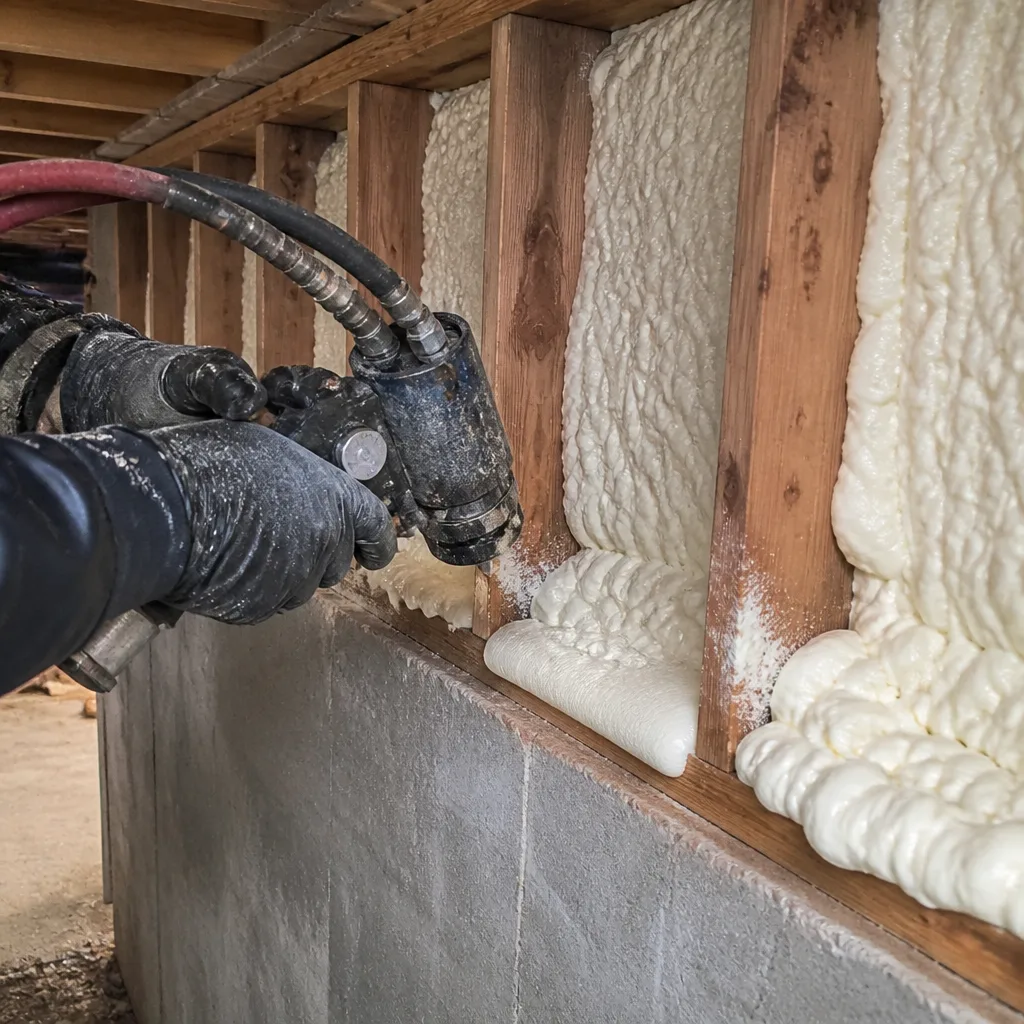
Open Cell Spray Foam is the workhorse product for Rialto attics, especially in the older 92376 core where the original blown-in insulation has settled into a thin, dusty mat. Rialto summers push attic temperatures well past 130°F, and open-cell foam applied to the ceiling plane stops that heat before it bleeds into the living space. Because Rialto’s 92376 core was built fast for aerospace and rail-era workers, many attics still hold the original 1960s and 1970s batt or blown-in insulation that has settled, sun-baked, and been disturbed by pests for decades. Spray foam here is almost always a seal-and-correct job layered over legacy material, not a fresh-cavity install. In the newer 92377 subdivisions the opposite is true: foam is used to close the knee-wall and attic-hatch gaps that factory-built construction left behind.
Sealing Over Settled Blown-In
Homeowners often ask if we need to remove the old insulation first. In most Rialto homes, no. The open-cell Icynene we spray bonds to the existing ceiling plane and locks the legacy material in place while filling the gaps around can lights, wire penetrations, and the attic hatch. A typical open-cell job in a 1,200 to 1,800 square foot Rialto home runs $3,200 to $5,800 depending on deck condition and how much air-sealing prep the attic needs.
Knee Walls in North Rialto
In 92377 subdivisions, the problem is rarely missing insulation. It’s knee walls and attic penetrations that were never sealed at construction. We spray open-cell foam into those cavity gaps so the air you paid to cool stays in the rooms where you set the thermostat.
Spray Foam Insulation Contractors in Rialto
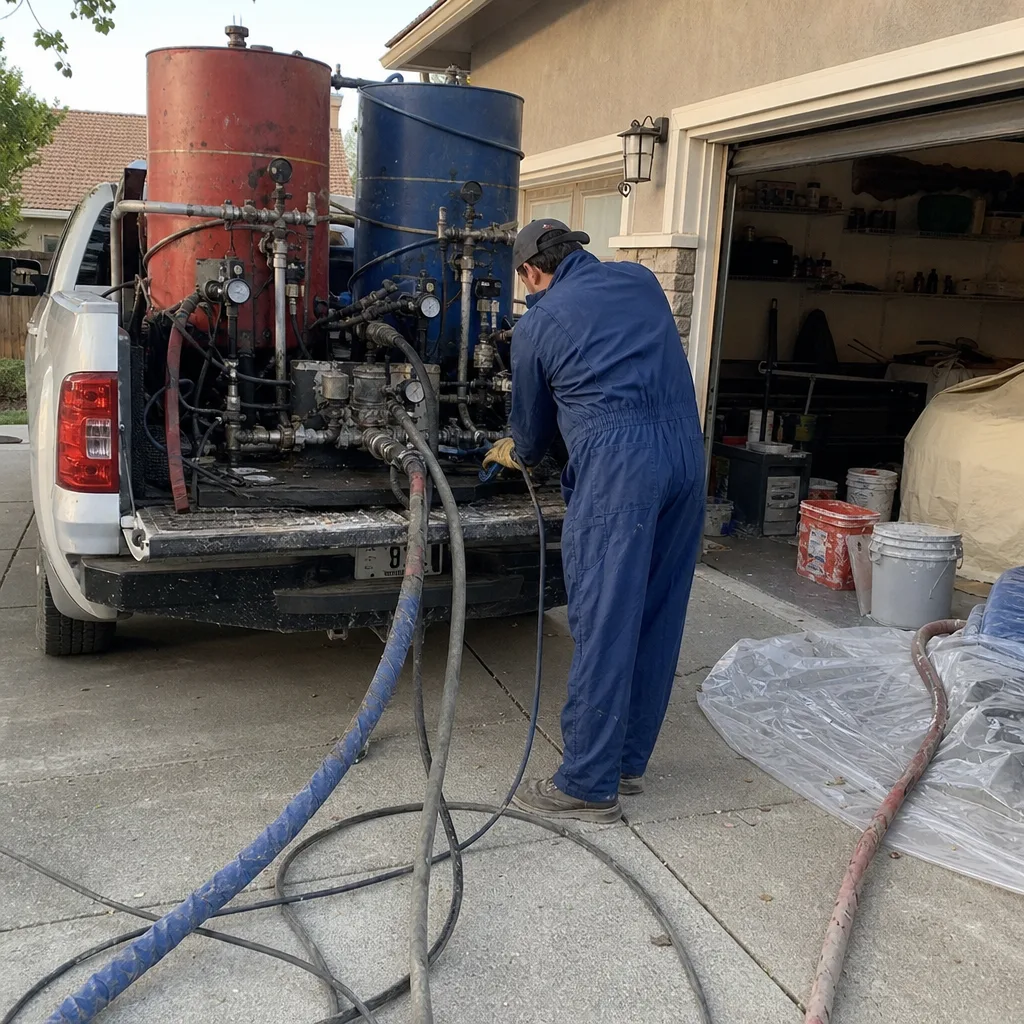
Spray Foam Insulation Contractors in Rialto fall into two groups: general construction crews that offer foam as a side service, and dedicated insulation specialists like Hometown Insulation Co. The difference matters when you’re asking a contractor to work inside a 130°F attic in August. Our spray foam crews in Rialto are trained specifically on Icynene and Demilec application methods, temperature tolerances, and the ventilation requirements that Inland Empire heat makes non-negotiable. When Santa Ana winds drive dry, hot air through the Cajon Pass, an improperly vented attic doesn’t just cost you money. It stresses your roof deck and ages your HVAC ductwork faster.
Rim Joist and Garage Ceiling Work
Rialto homeowners with attached garages often overlook the rim joist, but that’s a primary entry point for hot outside air. We foam rim joists and garage ceilings in Rialto homes regularly, usually in the $900 to $2,400 range depending on linear footage and access. The payoff is a garage that doesn’t bake everything stored in it and a house wall that stops fighting the heat.
Roof Deck Applications
Some Rialto homes, particularly ranchers with vaulted ceilings or converted attics, benefit from spray foam applied directly to the roof deck. This creates a sealed, conditioned attic space that stays within a few degrees of the living area. Expect $4,800 to $9,500 for a typical Rialto roof deck based on square footage and rafter depth.

Trusted Brands We Service in Rialto
We carry eight insulation brands because different Rialto houses need different materials. For spray foam, we lean on Icynene open-cell and Demilec closed-cell, two brands specified for high-performance building envelopes rather than entry-level foam jobs. For Rialto homeowners who want a hybrid approach, GreenFiber cellulose offers a recycled-content option for topping up legacy attics before we air-seal, and Owens Corning batts handle specific cavity needs. Carrying multiple brands means we recommend what your home actually needs. Call (877) 265-9918 and we’ll explain which product fits your attic, your budget, and your cooling bill.
Common Spray Foam Insulation Problems We See in Rialto Homes
- Settled 1960s and 1970s blown-in that’s down to a few inches. In the 92376 core, decades of heat and wind have dried the original insulation into a mat that no longer does much. We air-seal and layer foam over it so the whole assembly works again.
- Sun-baked radiant barriers and duct wrap. Rialto’s dry, wind-driven summers destroy radiant barriers over time. If the barrier has degraded, the assembly fails even when the new foam is fine. We inspect and correct that before spraying.
- Unsealed knee walls and attic hatches in 92377 homes. Newer subdivisions have more installed insulation but worse air sealing. Santa Ana-driven dry heat bypasses the insulation through these gaps, and spray foam is the most effective fix.
- Can lights and penetration leaks in older attics. Open-cell foam sprayed without air-sealing can lights first leaves the original heat-leak paths intact. We seal those penetrations before applying foam, which is what keeps hot attic air out of your living space.
Pricing for Spray Foam Insulation in Rialto, CA
In Rialto, you’ll pay somewhere between $3,200 and $9,500 for spray foam insulation depending on scope. Rim joist sealing runs $900 to $2,400. An open-cell attic ceiling job on a smaller ranch home lands around $3,200 to $5,800. A full roof deck on a larger home can reach $9,500. What moves the number: attic access, existing insulation condition, whether knee walls need attention, and how much air-sealing prep we have to do before spraying. We give upfront bids in writing, and our estimates are free. Call (877) 265-9918 and Nate or a member of our team will schedule a time to walk your attic with you.
We Also Serve Cities Near Rialto
Our crews cover the Inland Empire from Rialto outward, including Bloomington, Fontana, Muscoy, and Grand Terrace. If you live in a neighboring city and need the same heat-focused Spray Foam Insulation in Rialto approach applied to your home, we’ll bring the same brand options and the same honest assessment. Call (877) 265-9918 and we’ll schedule based on your location.
Serving Rialto, CA — Our Local Coverage Area
We’re based in the Rialto area and know this community well. Use the map below to see our service coverage — if you’re nearby, we can almost certainly help.
FAQs About Spray Foam Insulation in Rialto
Because the problem in older 92376 homes is rarely just missing insulation; it’s air movement. A top-up adds material over leaky can lights, open hatch gaps, and wall cavities that let hot air pour into the living space. Spray foam seals those paths while adding R-value, so you get both the barrier and the insulation in one step. We recently foamed the attic of a 1968 single-story stucco tract home off the 92376 core, where the original blown-in had settled to a few inches and decades of Santa Ana wind had dried it into a dusty mat around the can lights. After air-sealing the hatch and penetrations, our crew applied open-cell Icynene to the ceiling plane, tying the new foam into the legacy layer and closing the gaps that were letting 100°F-plus attic air bleed into the living space. For older Rialto homes, that seal-and-correct approach is the difference between a fix that lasts and a top-up that wastes money. Call (877) 265-9918 for a free attic assessment.
Sometimes, but only if the radiant barrier is still structurally intact and properly vented. In Rialto’s dry heat, many radiant barriers have been sun-baked and wind-dried for decades, and a degraded barrier means the assembly fails at the barrier rather than at the foam. We inspect the barrier first, and if it’s shot, we’ll recommend removing or bypassing it before spraying. Our crews see this regularly in 92376 homes that have never had attic work done since the original build. The inspection is part of every bid, so you’ll know exactly what’s there before we quote a number.
Because 92377 homes built in the 1980s through 2000s typically have decent installed insulation but poor air sealing. Knee walls, attic hatches, and plumbing penetrations were often left open at construction, and Santa Ana-driven dry heat bypasses the insulation through those gaps. Spray foam closes them. We’ve worked on north Rialto homes where the fiberglass looked fine but the attic was still bleeding heat into the bedrooms because of unsealed cavities. The fix is usually small and fast, and it makes the existing insulation perform the way it should.
We use Icynene open-cell foam for most Rialto attic ceiling and knee wall applications, and Demilec closed-cell for rim joists, garage ceilings, and roof decks where moisture resistance or structural strength matters. Both are performance-tier brands used in high-performance building envelopes, not entry-level products. We chose these lines because they hold up under sustained Inland Empire heat and because Rialto homeowners deserve materials that perform past the first five years. For hybrid projects, we pair the foam with GreenFiber cellulose or Owens Corning batts where that makes sense.
It shifts the priority almost entirely to heat resistance rather than cold-weather performance. Rialto winters are mild, so we don’t spec foam thickness for freezing conditions. We spec it for 95-105°F summers and the punishing heat that builds in attics day after day. That means open-cell foam at sufficient depth to block radiant heat transfer, with ventilation details sized for the Inland Empire’s dry, wind-driven conditions. The same foam spec that works in Big Bear would be oversized and overpriced here, and a good contractor won’t sell you foam you don’t need.
Written by Nate Cervantes, Owner at Hometown Insulation Co, serving Rialto and the surrounding Inland Empire.