
Fast, Reliable Spray Foam Insulation Across Corona
Spray foam insulation in Corona typically costs $2.50 to $6.50 per square foot installed, with most attic retrofit jobs landing between $4,000 and $9,500 depending on foam type and square footage. Homes in the 92880 and 92881 corridors usually need a different approach than older downtown stock, and we schedule Corona estimates within 48 hours in most weeks. If you’re tired of upstairs bedrooms that hit 105°F in July or Santa Ana winds that whistle through your attic seams, call Nate and the crew at (877) 265-9918 and we’ll give you a straight read on what your house actually needs.
We work in Corona every week, from the tract subdivisions east of the 15 up toward the foothills near the Cleveland National Forest, down through the original core near Main Street, and across the newer builds along the 91 corridor. We know this city’s housing stock because we’ve crawled through hundreds of its attics. The homes here have a specific set of problems tied to when they were built, how they were insulated originally, and what the Santa Ana winds do to them for a few months every year.
Why Hometown Insulation Co Is Corona’s Preferred Spray Foam Insulation Company
Hometown Insulation Co is an insulation specialist, not a general contractor who squeezes foam jobs between roofing and HVAC work. Insulation is all we do, which means our technicians in Corona spend every working day dealing with exactly the problems your house has: settled fiberglass, leaky top plates, wind-driven attic air bypass, and tile roofs radiating heat into living space. We carry eight industry-recognized insulation brands, including Demilec and Icynene for spray foam, so the recommendation you get is driven by your house, not by whatever product happens to be on our truck that week.
Nate Cervantes leads the team, and he’s the one you’ll talk to when you call. He walks Corona attics personally on most estimates, measures what’s actually up there, and tells you honestly whether spray foam is the right retrofit or whether blown-in or a different method would serve you better. We don’t push foam on homes that don’t need it. That’s the whole point of being a specialist with three methods under one roof: the right insulation for your home, not the easiest one to install.
Corona homeowners repeatedly tell us the same thing after we finish a job: rooms that stay the temperature you set, and a different feel in the house when the Santa Anas hit. Our customers in 92882, 92883, 92877, and 92878 refer us to neighbors because we show up when we say we will and the foam actually performs.
Closed Cell Spray Foam Insulation in Corona
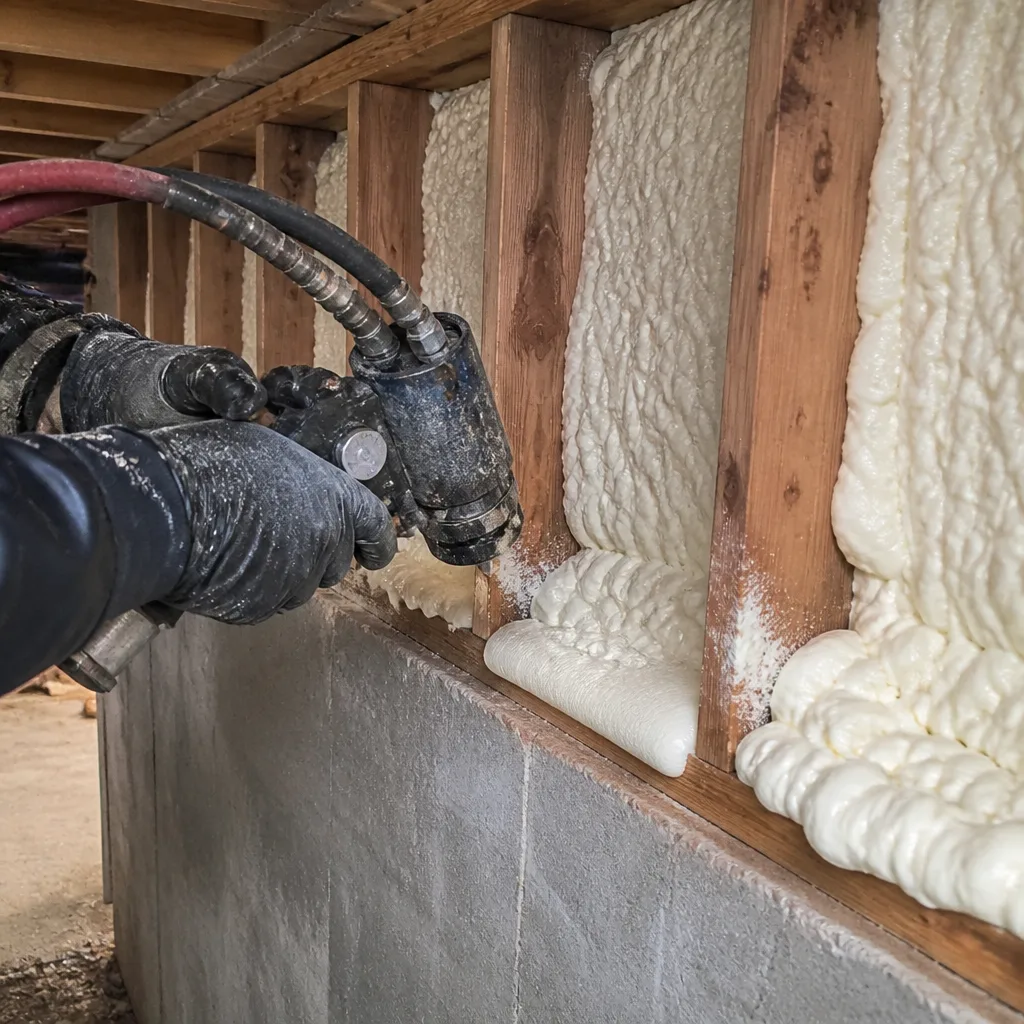
Closed Cell Spray Foam Insulation is the workhorse for Corona attics and roof decks because it does two things at once: it seals air leaks and it adds structural rigidity plus high R-value per inch. In a Corona tract home with a tile roof and a big open attic, closed-cell foam applied to the underside of the roof deck stops radiant heat from turning the attic into an oven before it ever reaches your insulation. A typical closed-cell roof deck job in Corona runs $5.50 to $8.00 per board foot, and most attics in the 92880/92881 corridor fall into the $6,000 to $11,000 range for a full roof deck application.
Roof Deck and Hot Attic Work
We recently sprayed closed-cell foam in a 1998 two-story tract home off Foothill Parkway in the 92881 corridor, where the original attic fiberglass had compressed to R-13 and the homeowners complained of 105°F upstairs bedrooms. Our crew sealed the top plates and air handler platform with Icynene closed-cell foam, then added a radiant-barrier coating to the roof deck, cutting attic temperatures by 25°F during the next Santa Ana event. That’s the kind of result closed-cell delivers here: it seals the wind-driven leaks while blocking the radiant load.
When Closed-Cell Is the Right Call
Closed-cell makes sense when you have limited depth for insulation, when you’re converting a garage or conditioned attic, or when your attic has air handler platforms and ductwork that need air sealing. It’s also the better choice for Corona’s hotter low-lying areas where the thermal load is extreme. Because closed-cell is denser, it costs more than open-cell, but in the 92882 and 92877 areas where summer highs push past 100°F routinely, the performance difference shows up in the first full summer cycle.
Open Cell Spray Foam in Corona
Open Cell Spray Foam is the more affordable way to get an air seal in a Corona attic, and for many homes in the city it’s the right material. It expands a lot, fills cavities completely, and costs less per board foot than closed-cell, typically $2.50 to $4.50 per square foot in Corona for attic applications. But there’s a catch that matters in this city specifically: open-cell is air-permeable, which means in the Santa Ana wind corridor it can let wind-driven air bypass the foam at seams if the install isn’t done carefully, reducing effective R-value and causing cold winter drafts.
Attic Floor and Cavity Applications
When we install open-cell in a Corona attic, we apply it to the attic floor over your existing insulation or directly onto the drywall from below in a remodel. The foam expands into gaps, fills framing cavities, and creates a continuous air seal that stops conditioned air from leaking into the attic. For a typical 1,500 to 2,200 square foot attic in 92883 or 92878, expect to pay $3,200 to $6,800 for an open-cell floor application.

Interior Walls and Sound Control
In Corona’s denser neighborhoods, especially older homes off Main Street or near downtown, open-cell foam inside interior walls does double duty: it insulates and it cuts noise. For bedrooms facing busy streets or the 91, open-cell in wall cavities is one of the most cost-effective sound-deadening moves you can make. We stock both Icynene and Demilec open-cell products, so you get a performance-tier material instead of an entry-level foam.
Trusted Brands We Service in Corona
We install and stand behind Demilec and Icynene spray foam in Corona, two of the brands most trusted in high-performance building envelopes. We carry Demilec for closed-cell jobs where density and R-value matter most, and Icynene for open-cell applications where air sealing at a lower cost is the priority. For Corona homeowners who want options beyond spray foam, we also install Owens Corning, Johns Manville, and GreenFiber products, which means you’re never locked into one material decision. The foam we spray in Corona is ordered specifically for each job, stored properly, and applied by our own crew, not subcontracted out.
Common Spray Foam Insulation Problems We See in Corona Homes
- Settled fiberglass hiding under new foam. In 1990s east Corona tracts, builders installed just enough attic fiberglass to hit the code minimum for the era. After 15-25 years, it’s compressed to R-11 or R-19, and if a previous contractor sprayed foam over it without removing the dead product, the house still overheats in 100°F+ summers. We find this on nearly every estimate in 92880 and 92881.
- Wind-driven air bypass through open-cell seams. The Santa Ana corridor punishes open-cell foam if seams aren’t sealed properly. We’ve corrected several Corona attics where wind-driven air was blowing through open-cell applications installed by other companies, causing cold drafts in winter and a spike in heating bills.
- Condensation and foam degradation in older downtown homes. Older single-story homes near downtown Corona often have single-pane glazing and no attic insulation at all. Spray foam alone, without addressing roof-deck radiant gain, can trap moisture and lead to condensation and premature foam breakdown. We see this most often in homes built before 1970.
- Tile roofs radiating heat through unsealed eaves. Corona’s tile-roof tract homes look great but radiate heat into the attic all summer. If the eaves and soffit gaps aren’t sealed when foam is applied, hot air pours in around the edges and the foam underperforms. We seal the perimeter before we spray, every time.
Pricing for Spray Foam Insulation in Corona, CA
Here’s what spray foam insulation actually costs in Corona right now. Closed-cell roof deck applications run $5.50 to $8.00 per board foot, with most full attics in 92880, 92881, 92882, and 92883 landing between $6,000 and $11,000. Open-cell attic floor jobs run $2.50 to $4.50 per square foot, or about $3,200 to $6,800 for a typical Corona attic. Rim joist sealing in a Corona basement or crawlspace is the smallest job we do, usually $1,200 to $2,800 depending on linear footage. The biggest cost drivers are attic square footage, roof deck accessibility, and whether we’re removing settled fiberglass before spraying. Call (877) 265-9918 for a free estimate and we’ll measure your attic and give you a fixed number, not a range.
We Also Serve Cities Near Corona
While this page is focused on Spray Foam Insulation in Corona, our crew also works throughout Home Gardens, El Cerrito Corona, Eastvale, and Norco on a regular schedule. If you’re just outside the Corona city line, call and ask – the odds are good we’re already in your neighborhood on another job and can add your estimate to the same route. Our full service area and material list is on the Spray Foam Insulation page.
Serving Corona, CA — Our Local Coverage Area
We’re based in the Corona area and know this community well. Use the map below to see our service coverage — if you’re nearby, we can almost certainly help.
FAQs About Spray Foam Insulation in Corona
Yes. Spray foam helps with both Corona-specific problems at once: closed-cell foam on the roof deck blocks radiant heat gain from tile roofs and 100°F+ air, and the air seal it creates stops wind-driven air from the Santa Ana corridor from bypassing your insulation. In Corona homes where both are done correctly, we typically see attic temperature drops of 20-25°F in the first summer. Call (877) 265-9918 and we’ll tell you honestly whether foam is the right move for your specific house.
No, not usually. Spray foam applied directly over settled fiberglass in a 1990s Corona tract home traps heat and hides the R-value loss underneath, so the house still overheats. The right approach is to remove or prep the existing material first, then spray foam against the roof deck or on the attic floor. We do this almost every week in 92880 and 92881, and the difference for the homeowner is dramatic.
Closed-cell generally works better in Corona’s foothill homes, because those areas get the full force of wind-driven air moving down from the higher elevations at night. Open-cell is air-permeable and can allow air to bypass the foam at seams during Santa Ana events, which reduces effective R-value and causes cold drafts. We stock both Demilec closed-cell and Icynene open-cell, so we’ll recommend the right one for your specific elevation and orientation, not just a default product.
Tile roofs in Corona act as heat sinks, radiating heat into the attic all afternoon and evening. Closed-cell spray foam applied to the underside of the roof deck creates a thermal break that stops that radiant heat before it enters the attic. When combined with a radiant-barrier coating, as we did on the Foothill Parkway home recently, attic temperatures can drop by 25°F during the next heat event.
Yes, spray foam is code-compliant in Corona, but older downtown homes with no attic insulation and single-pane glazing need a different sequence of work than tract homes. If you foam the roof deck without addressing ridge and eave ventilation, you can trap moisture and cause condensation. We assess each older Corona home individually and tell you what’s needed before we spray anything.
If you live in Corona and your attic is hot, your upstairs rooms won’t hold a temperature, or your energy bills climb every summer, call Nate at (877) 265-9918. We’ll come out, measure what’s actually in your attic, and give you a straight answer about whether spray foam is the right fix for your house. Free estimates, honest recommendations, and the right insulation for your home, not the easiest one to install.
Written by Nate Cervantes, Owner at Hometown Insulation Co, serving Corona and the surrounding communities.