
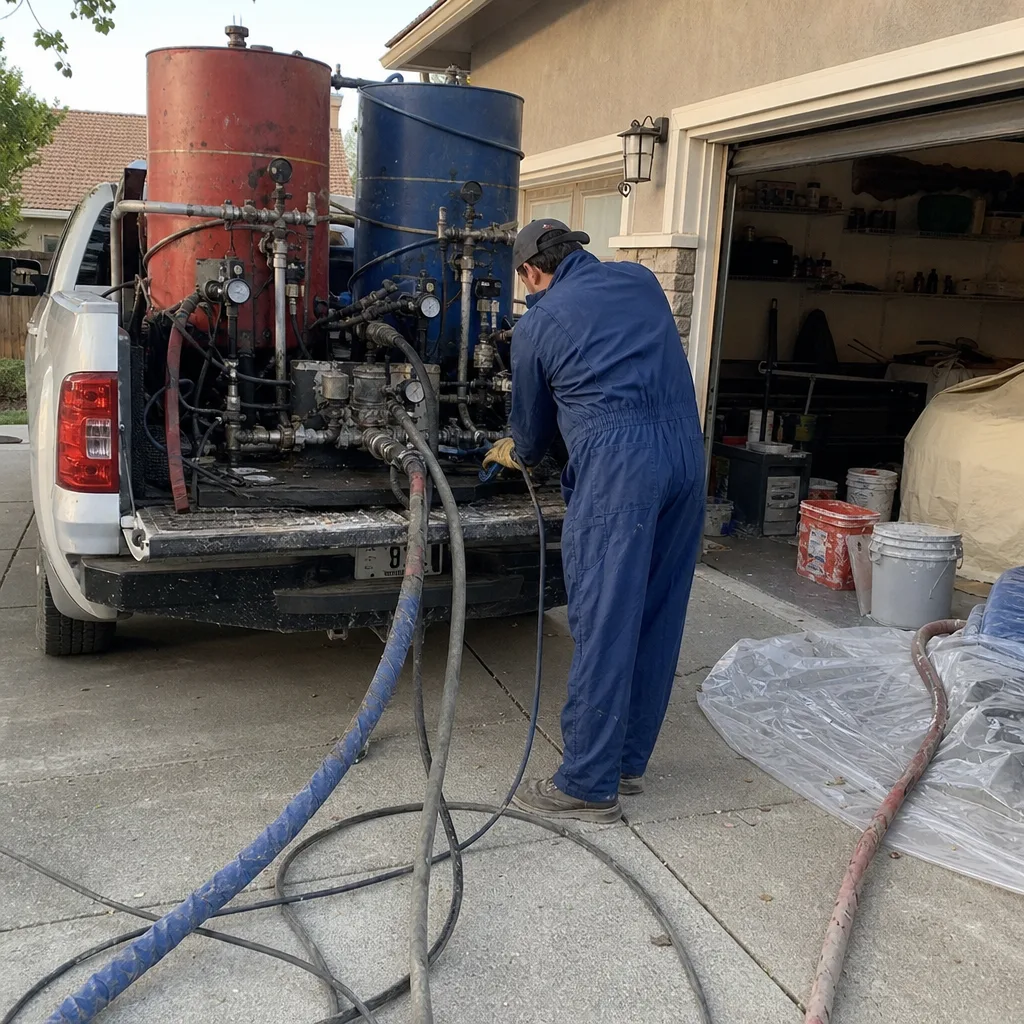
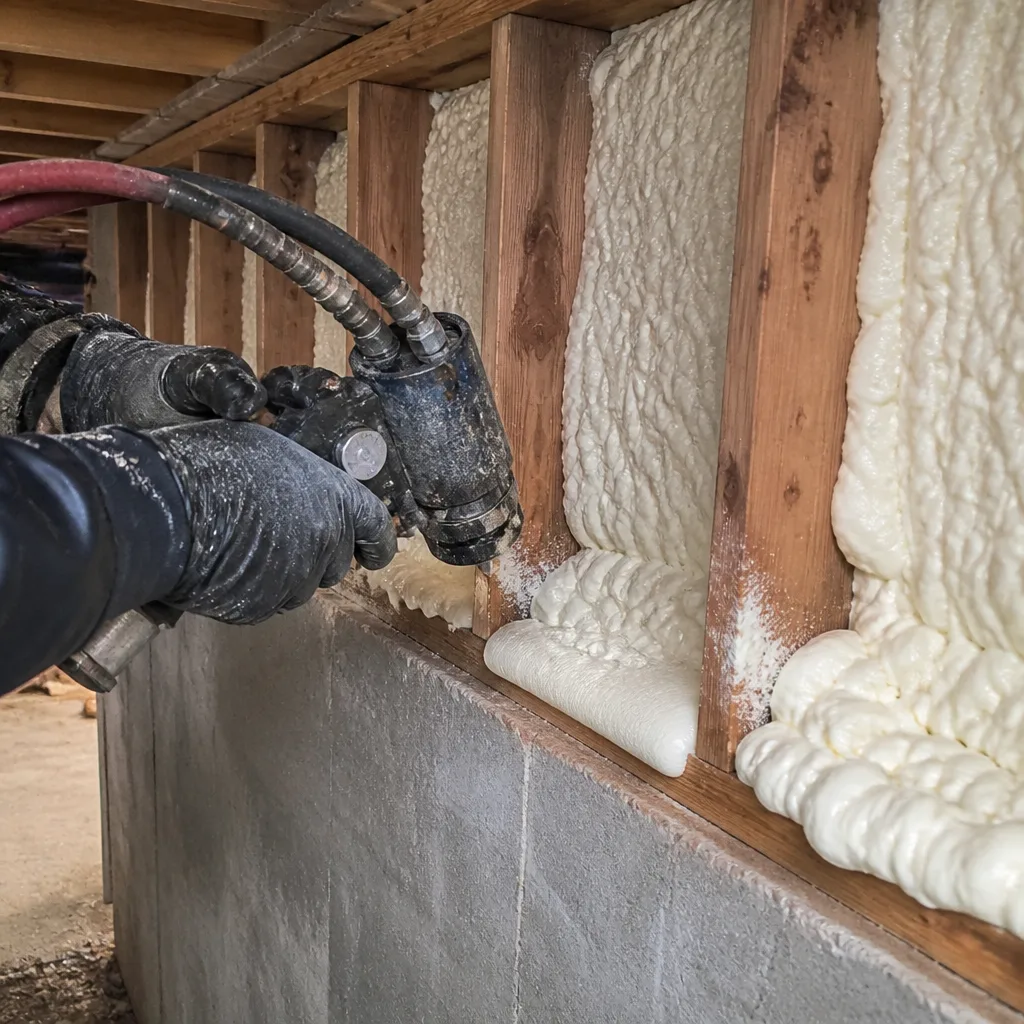
Fast, Reliable Spray Foam Insulation Across La Verne
Spray foam insulation in La Verne typically runs $2.50 – $7.50 per square foot installed, with most homes falling between $1,900 and $6,800 depending on whether we’re foaming a low-pitch attic in the valley grid or sealing steep rafter bays up in the foothills. The real question isn’t cost per square foot. It’s what your specific house needs to stop losing conditioned air through gaps, penetrations, and thin original insulation.
Our crews know the difference between a 1962 stucco tract home off Wheeler Avenue and a hillside house climbing toward Marshall Canyon. That matters because spray foam behaves differently in a vented low-pitch attic than it does against an unvented roof deck baking in afternoon sun. If you’re tired of rooms that never reach the temperature you set, call us at (877) 265-9918. We’ll give you a straight answer about what your La Verne home actually needs.
Why Hometown Insulation Co Is La Verne’s Preferred Spray Foam Insulation Company
La Verne homeowners call us because we ask different questions than most insulation companies. Before we quote foam, we look at your attic’s pitch, your duct runs, and whether your original fiberglass batts have collapsed around the plenum. That diagnostic step matters in La Verne, where housing stock splits so sharply between flatland tracts and foothill builds.
We spend a lot of time in 91750. We know the streets where every third house still has the original R-11 batts from the Eisenhower and Kennedy administrations. We know which foothill streets get direct afternoon sun from 2:00 PM until sunset. That local familiarity means we don’t quote La Verne homes from a satellite photo. We walk the attic, check the existing insulation, and tell you what’s actually going on.
Every tech on our spray foam crew is a full-time insulation specialist. They don’t split time with roofing or HVAC jobs. Insulation is all we do. Nate Cervantes built Hometown Insulation Co around one idea: match the material and method to the house, not to what’s easiest to install. If you live in a midcentury valley tract, that might mean open-cell foam on the attic floor. If your house climbs into the foothills with unvented rafter bays, closed-cell is usually the right call. We’ll explain the difference in plain English before any work begins.
Homeowners across La Verne have told us the same thing after we finish: their south-facing rooms finally hold temperature in August. That’s the result we’re after.
Spray Foam Attic Insulation in La Verne
Spray Foam Attic Insulation is the highest-impact upgrade for most La Verne homes because the attic is where afternoon heat gain enters hardest. In a low-pitch 1950s – 70s tract house, the original fiberglass often sags around duct boots and leaves gaps that let attic heat radiate into bedrooms. Foam solves that by expanding into every seam and creating a continuous thermal barrier at the attic floor level.
For valley grid homes with vented attics, we typically apply open-cell foam directly to the attic floor after removing degraded batts. That seals top plates, wire penetrations, and the gaps around HVAC plenums that fiberglass can never close. For foothill homes with steep roofs and unvented rafter bays, we switch to closed-cell foam applied to the underside of the roof deck, which stops radiant heat before it ever enters the attic space.
This work in La Verne typically runs $2,000 – $5,500 depending on square footage, existing insulation removal, and whether the roof deck or attic floor is the target surface. It’s the single most effective fix for the “upstairs never cools” complaint we hear constantly.
Open-Cell for Vented Valley Attics
Open-cell foam is the right tool for the flatland tract homes where builders framed vented attics with soffit and ridge airflow. It expands to fill the cavity, but unlike closed-cell, it allows vapor to move through. For La Verne’s dry inland climate and mild winters, that breathability works well on attic floors where the conditioned envelope is below.
Closed-Cell for Foothill Roof Decks
When a home climbs the hillside toward the Angeles National Forest, the roof geometry changes. Steep pitches, hip and valley framing, and unvented rafter bays demand closed-cell foam. It delivers roughly double the R-value per inch and acts as a vapor barrier, which prevents moisture from condensing against hot roof sheathing during our hot summer afternoons.
Spray Foam Wall Insulation in La Verne
Spray Foam Wall Insulation addresses a different failure mode in La Verne homes: heat gain through south and west-facing exterior walls. Those original stucco walls from the 1950s and 60s often have empty stud bays or thin fiberglass batts that leave rooms baking during late afternoon sun and Santa Ana wind events.

We apply foam into open wall cavities during renovations, or use injection methods to fill closed walls without tearing out drywall. For homeowners redoing a kitchen, adding a room, or replacing siding, this is the window to upgrade walls permanently. Closed-cell foam adds structural rigidity along with a high R-value, which matters on older wood-frame construction.
Wall foam in La Verne typically runs $3.50 – $7.50 per square foot of cavity area. That range covers both open-cell for interior sound-dampening walls and closed-cell where moisture or structural concerns apply. Most wall-only jobs land between $1,500 and $4,000. If a renovation is already opening the walls, the marginal cost drops significantly.
Rim Joist Sealing for Older Homes
The rim joist is the band where the floor framing meets the foundation wall, and in 1950s – 70s La Verne homes it’s often completely uninsulated. That gap lets outside air infiltrate at the base of the house. Sealing rim joists with closed-cell foam stops drafts and prevents the stack-effect airflow that pulls hot attic air into the living space.
Garage Ceiling Foam for Attached Garages
Attached garages under occupied rooms are heat sinks in La Verne’s summer. Foaming the garage ceiling creates a thermal break between a 120°F garage and the bedrooms above. It’s a smaller job, but for split-level and hillside homes where the garage sits under living space, it makes an immediate difference.
Trusted Brands We Service in La Verne
We carry Icynene and Demilec spray foam products because both brands specify open-cell and closed-cell formulas used in high-performance building envelopes, not just entry-level jobs. Homeowners who want recycled-content or fire-resistant options outside the foam category can also talk to us about Spray Foam Insulation alternatives like GreenFiber cellulose or Rockwool batts. We stock materials with local supplier partners, which means we don’t order foam from a warehouse three states away when a La Verne homeowner needs a job done the same week.
Common Spray Foam Insulation Problems We See in La Verne Homes
- Collapsed original R-11 batts in low-pitch valley attics. Fiberglass from the 50s through 70s compresses under its own weight and sags around ductwork, leaving open gaps that radiate heat into bedrooms. This is the single most common problem we correct in flatland La Verne tract homes.
- Unsealed rafter bays in steep-roof foothill homes. Fiberglass batts rarely maintain full contact with the roof deck on steep or complex framing. The resulting air loops let heat cycle continuously through the rafter cavity, and only closed-cell foam stops that convective loss.
- Leaking original ductwork in the attic. La Verne’s hot attic air gets pulled into the supply stream through unsealed duct joints and plenum connections. Foam helps enormously, but if the ducts aren’t sealed first, conditioned air still escapes before it reaches the registers.
- South-west wall heat gain in stucco construction. Original stucco walls without adequate insulation hold heat long after sunset. Spray foam in the wall cavities is the most effective correction, especially on west-facing rooms that face direct afternoon sun.
Pricing for Spray Foam Insulation in La Verne, CA
Open-cell attic floor foam in a valley tract home usually runs $2,000 – $4,500. Closed-cell roof deck application on a steep foothill home starts around $3,500 and can reach $6,800 depending on roof complexity and rafter depth. Wall cavity foam ranges $3.50 – $7.50 per square foot with most projects landing between $1,500 and $4,000. Rim joist sealing is the most affordable starting point, typically $700 – $1,500 for an entire perimeter. Factors that shift cost include the existing insulation removal, access difficulty, and whether we’re foaming open walls during a renovation or injecting closed cavities. We give free on-site estimates with the price quoted before any work starts. Call (877) 265-9918 to schedule yours.
We Also Serve Cities Near La Verne
Beyond our regular work in La Verne, we run spray foam crews into Claremont, Pomona, Glendora, and Montclair. Each city has its own housing stock quirks. The same foothill conditions that affect La Verne hillside homes apply across the San Gabriel Valley boundary to the north and east of us.
Serving La Verne, CA — Our Local Coverage Area
We’re based in the La Verne area and know this community well. Use the map below to see our service coverage — if you’re nearby, we can almost certainly help.
FAQs About Spray Foam Insulation in La Verne
Yes, spray foam works very well in low-pitch attics, and most of the 1950s – 70s tract homes in La Verne are ideal candidates for open-cell foam on the attic floor. The key is whether the attic is vented (soffit and ridge vents), which most valley tract homes are. For vented attics, we remove the degraded original batts, air-seal all penetrations and duct boots, then apply foam to the attic floor. This turns your attic from a heat reservoir into a neutral buffer zone. Call (877) 265-9918 for a free attic inspection.
Yes, steep-roof rafter bays are a standard closed-cell spray foam application for us in the La Verne foothills. The closed-cell foam is applied directly to the underside of the roof sheathing between rafters, creating an unvented, conditioned attic space. This is actually the superior approach for steep roof decks where fiberglass batts can’t maintain contact and afternoon sun bakes the sheathing. This exact scenario represents a large portion of our foothill work in 91750. Call us and we’ll evaluate your roof geometry in person.
Yes, sealing ducts before or during a spray foam job is essential if your ducts run through the attic. Unsealed ducts pull hot attic air into the supply stream through every joint and connection, which defeats much of the benefit of new insulation. We recommend duct sealing as part of any attic foam project where the plenum or branch lines show leakage. Our crews can assess this during the estimate. Call (877) 265-9918 to schedule a full attic inspection.
Spray foam is excellent at blocking the air infiltration that Santa Ana winds push through a home’s shell. The foam expands to fill cracks, gaps, and penetrations that fiberglass simply covers without sealing. During a Santa Ana event, warm dry air pushes against exterior walls and through every seam. Closed-cell foam on walls and rim joists creates an air barrier that stops that infiltration at the source. La Verne homeowners notice the difference most in rooms facing north toward the canyon mouths where the wind funnels through.
Open-cell foam is softer, less dense, breathable, and roughly R-3.5 per inch. Closed-cell foam is rigid, denser, water-resistant, and roughly R-6.5 – 7 per inch. For La Verne valley tract homes with vented attics, open-cell on the attic floor is usually the right match. For foothill homes with unvented roof decks or any wall application where moisture and air infiltration are concerns, closed-cell is the better choice. We’ll explain which one fits your house during the estimate. Call (877) 265-9918 to get specific answers for your home.
Written by Nate Cervantes, Owner at Hometown Insulation Co, serving La Verne and the surrounding San Gabriel Valley communities.