
Fast, Reliable Spray Foam Insulation Across Pomona
Spray foam insulation in Pomona typically costs $2.50 to $6.00 per board foot installed, with most whole-attic projects landing between $4,500 and $12,000 depending on foam type, attic size, and how much corrective prep the job needs. We get calls from homeowners across 91766, 91767, and 91768 who are tired of rooms that won’t hold temperature past 2 p.m. Our crews know the older bungalows near downtown and the tract homes out toward Phillips Ranch, and we can usually reach a Pomona home within 24 to 48 hours for an estimate. Call (877) 265-9918 and we’ll talk through what your attic actually needs.
Why Hometown Insulation Co Is Pomona’s Preferred Spray Foam Insulation Company
Insulation is all we do. Not roofing, not HVAC, not windows. Every truck we send into Pomona is stocked for insulation work, and every tech on our crew spends their days in attics, not splitting time between trades. That focus matters in a city like Pomona, where the housing stock is older and the attics have been patched and re-patched over decades. We’re led by Nate Cervantes, who built this company around a simple idea: match the material to the house, not the other way around. When a Pomona homeowner calls us, they get a straight diagnosis, not a scripted pitch for whichever product we happen to have the most of.
We carry eight insulation brands, including Owens Corning, Johns Manville, and Knauf, so the recommendation is driven by your home’s construction, not by a single-brand upsell. For spray foam specifically, we install Icynene and Demilec, two names you’ll find in high-performance building envelopes. That means a Pomona homeowner has real options between open-cell and closed-cell foam, and we’ll explain the tradeoffs honestly, including when spray foam isn’t the right call at all.
Closed Cell Spray Foam Insulation in Pomona
Closed cell spray foam insulation is the higher-density option we install most often in Pomona attics because it adds structural rigidity and acts as both an air barrier and a vapor barrier in one pass. In a city where attic temps regularly push past 130°F in July, closed-cell foam applied to the roof deck creates a conditioned attic space that stops the superheated air from cooking your ductwork. That matters for Pomona homeowners because so many of our older homes run ducts through the attic, and every degree of attic heat pushes cooling costs up.
Where Closed Cell Makes Sense
In Pomona’s older homes, closed cell is the right call for roof deck applications, rim joists, and anywhere moisture or structural strength is a concern. It’s also the better choice in low-pitch attics where headroom is tight, because it delivers a higher R-value per inch. A 1940s bungalow with 2×6 rafters can hit meaningful R-value gains with closed cell where open cell would need more depth.
A Note on Durability
Closed cell foam cures rigid. It doesn’t sag or settle over time, which matters in Pomona’s heat. We’ve seen cheap jobs where open cell was sprayed in attics that hit extreme temperatures and lost performance within a few years. Closed cell holds up, and that’s why we recommend it for most retrofits here.
Open Cell Spray Foam in Pomona
Open cell spray foam is the lighter, more affordable option that works well in Pomona homes where budget matters more than maximum R-value per inch, and where the attic is already vented properly. It expands aggressively, fills odd cavities better than closed cell, and does a fine job air-sealing top plates, wire penetrations, and recessed lights. The tradeoff is that open cell is vapor-permeable, so it’s not the right material against roof decks in homes with humidity concerns.
Sound Control and Comfort
One thing Pomona homeowners like about open cell is the sound dampening. If you live near Holt Avenue or the 10 freeway corridor, open cell in interior walls and between floors knocks down road noise noticeably. It also works well in garage ceiling applications where you’re trying to keep an attached garage from bleeding heat into a bedroom above.
Where to Be Careful
Open cell needs a solid plan for ventilation when used at the roofline. In older Pomona attics that were never vented properly, applying open cell without addressing airflow can trap moisture. We flag that on every job because some contractors won’t, and a Pomona homeowner deserves to know before the spray gun comes out.
Trusted Brands We Service in Pomona
We install Spray Foam Insulation using Icynene and Demilec products, and we carry fiberglass and cellulose lines including Owens Corning, Johns Manville, Knauf, and GreenFiber for homes where a hybrid approach makes more sense. Nate Cervantes made the call early on to stock multiple brands because no single product line fits every Pomona attic. A 1920s bungalow near Ganesha Park has different needs than a 1970s ranch in Phillips Ranch, and we want the right material on the truck when we pull up. For Pomona customers, that means no waiting on special orders when your home needs a specific foam type.

Common Spray Foam Insulation Problems We See in Pomona Homes
- Foam sprayed over old batts without removal. In west-side and downtown Pomona homes, we routinely find someone blew foam over existing fiberglass batts. The foam can’t adhere properly, and the old insulation traps heat and moisture against the foam, degrading its performance. The fix is removal first, then foam.
- Unsealed top plates and penetrations. Older Pomona bungalows have electrical wires, plumbing vents, and framing joints that were never air-sealed. Spray foam over an unsealed attic just hides the leaks. We seal top plates, can lights, and duct boots before we spray.
- Ductwork sweating in superheated attics. Pomona’s summer attic temperatures are brutal on duct insulation. We see ducts dripping condensation onto attic floors, which leads to water stains, mold, and drywall damage. Sealing ducts and moving them into a conditioned space with spray foam stops the sweating.
- Inadequate ventilation with closed cell foam. In shallow 1920s – 1950s attics, we’ve seen closed cell applied to the roof deck without proper ventilation planning, trapping moisture and leading to wood rot. This is why we assess airflow before recommending a foam approach.
Pricing for Spray Foam Insulation in Pomona, CA
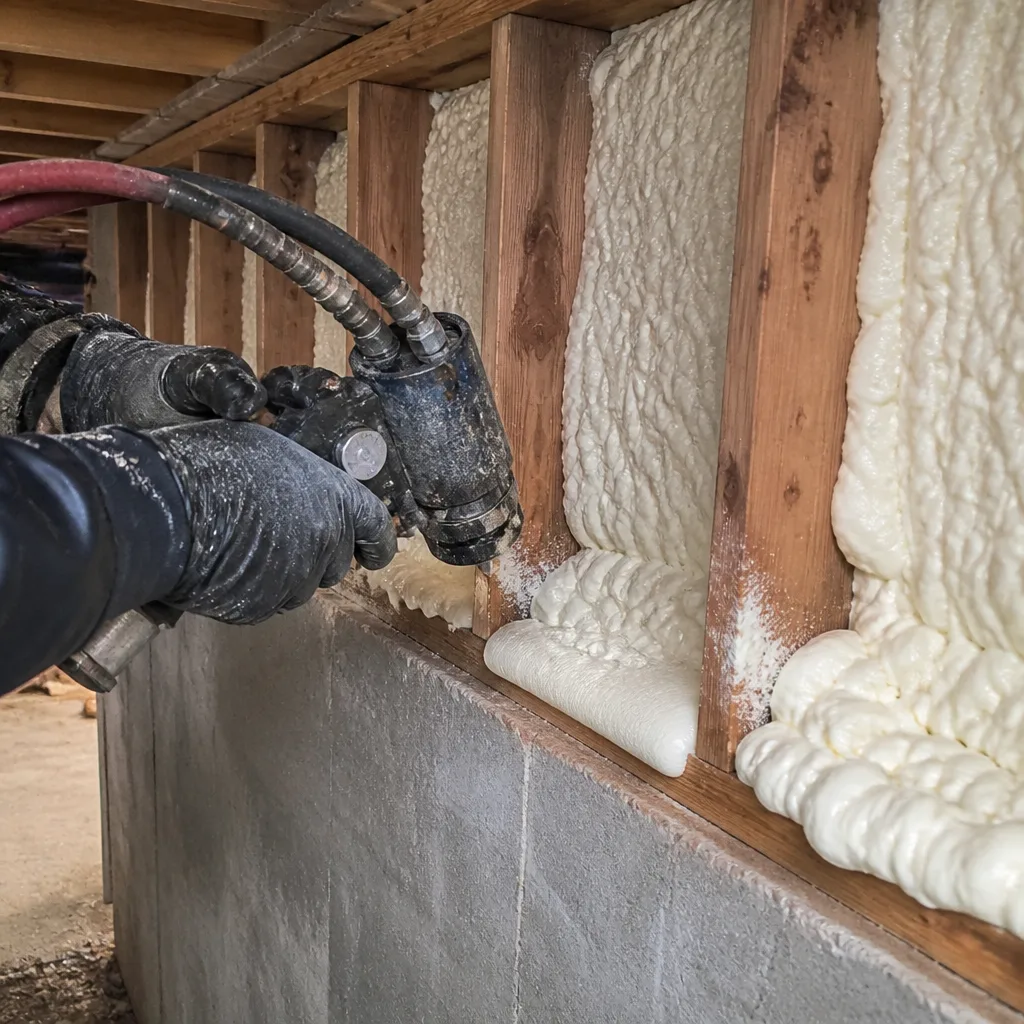
Here’s what you can expect to pay in Pomona’s market. Open cell spray foam typically runs $0.55 to $1.20 per board foot, while closed cell runs $1.20 to $2.50 per board foot. A typical 1,200-square-foot attic in an older Pomona bungalow, with removal of old insulation and air sealing included, lands between $4,500 and $9,500. Closed cell roof deck applications on that same attic push toward $8,000 to $12,000. Rim joist spray foam jobs in Pomona basements and crawl spaces usually run $1,500 to $3,500. What affects your price: attic size, foam depth, whether old insulation needs removal, and how much air sealing is required before we spray. Call (877) 265-9918 for a free estimate on your specific attic.
We Also Serve Cities Near Pomona
If you’re outside Pomona proper, we run crews throughout the eastern San Gabriel Valley. Pomona sits between La Verne and Walnut, and we also serve Covina and Claremont, plus the unincorporated pockets in between. Same crew, same brands, same straight talk.
Serving Pomona, CA — Our Local Coverage Area
We’re based in the Pomona area and know this community well. Use the map below to see our service coverage — if you’re nearby, we can almost certainly help.
FAQs About Spray Foam Insulation in Pomona
Because Pomona’s west-side bungalows in 91766 and 91767 typically have decades of piecemeal insulation work, blown-in over old batts, and unsealed framing that must be corrected before foam can do its job. Removing old insulation lets us air-seal top plates and penetrations properly, and it prevents the old material from trapping heat and moisture against the new foam. Call (877) 265-9918 and we’ll tell you if removal is needed on your attic.
Yes, applying closed cell spray foam to the roof deck or sealing and insulating ducts with foam brings attic temperatures down and stops duct sweating, which is a constant problem in Pomona’s summer heat. When ducts run through a 130°F attic, the cold air inside them causes condensation on the duct exterior, leading to water stains and mold on attic floors. Bringing the ducts into conditioned space or sealing them with foam eliminates the temperature difference driving that condensation.
For a 1950s ranch with a standard peaked roof and adequate attic depth, closed cell foam on the roof deck or open cell on the attic floor both work, but the deciding factor is whether your ducts run through the attic. If they do, closed cell at the roofline is the better play because it brings the whole attic into the conditioned envelope and stops duct heat gain. If ducts are in the crawl space, open cell on the attic floor with proper air sealing is a strong, more affordable option.
Pomona enforces California’s Title 24 building energy code, which sets minimum insulation R-values and air-sealing expectations for new construction and major remodels, and spray foam helps meet or exceed those standards in one pass. Closed cell foam in particular delivers high R-value per inch and acts as an air barrier, which makes Title 24 compliance easier on shallow-rafter attics where traditional batts don’t fit well. For existing homes, the immediate benefit is lower cooling bills, not code compliance, but the same principles apply.
In most Pomona homes built before 1980, yes, because the existing insulation is either degraded, installed over unsealed framing, or contaminated with rodent droppings and dust that compromise foam adhesion and indoor air quality. Spraying over old batts is a shortcut that creates a false sense of performance. We remove, clean, seal, then spray. Call (877) 265-9918 for a removal and replacement quote specific to your attic.
One More Thing About Pomona Attics
Pomona’s housing stock is what makes this job interesting. The west side is full of 1920s-to-1950s bungalows and cottages with shallow, low-pitch vented attics. Over the years, someone blew cellulose over old fiberglass batts, someone else added a layer of loose fill, and nobody ever sealed the top plates or the wire penetrations. The ducts run through a space that hits 130°F by noon in August, and the air handler is trying to push 55°F air through that furnace. Spray foam applied correctly in that attic changes everything. Applied incorrectly, it traps moisture and heat and makes a hot attic worse. That’s why we lead with diagnosis, not with a spray gun. On a 1940s bungalow off West Holt Avenue in 91767, our crew found original batts buried under loose fill, unsealed top plates, and ducts sweating through their insulation. We removed the failing batts, air-sealed the top plates and penetrations, then applied closed-cell spray foam to the roof deck with Icynene. Attic temps dropped, duct sweat stopped, and the homeowner finally stopped running the AC at 78°F just to keep the house under 85°F.
If your Pomona home fights you on cooling costs every summer, call (877) 265-9918. We’ll look at the attic, tell you what’s actually going on, and quote a fix that fits the house, not a product catalog.
Written by Nate Cervantes, Owner at Hometown Insulation Co, serving Pomona and the eastern San Gabriel Valley.